| Wed. February 18, 2026 |
 |
|
||
|
||||
| ||||


The nationwide protests in Iran began on December 28, 2025, and were sparked by a demonstration by traders in Tehran to protest over a sudden depreciation in the national currency. It then spread to other provinces of Iran. On January 12, the rial was trading at more than 1.4 million to $1, a sharp decline from around 700,000 a year earlier in January 2025 and around 900,000 in mid-2025. The plummeting currency has triggered steep inflation, with food prices an average of 72 percent higher than last year. Annual inflation is currently around 40 percent. Iran’s economy is ailing for several reasons. The country fought a 12-day war with Israel in June 2025, which resulted in infrastructural damage in several Iranian cities. Additionally, in September 2025, the UN re-imposed sanctions on Iran over its nuclear program when the UN Security Council voted against permanently lifting economic sanctions on Iran. In December, Iran introduced a new tier in its national fuel subsidy system, effectively raising the price of what had been some of the world’s cheapest petrol or gasoline and adding to the financial strain on households. Officials will now reassess fuel prices every three months, opening the door to further hikes. At the same time, food prices are set to climb after the Central Bank recently scrapped a preferential, subsidized dollar-rial rate for all imports except medicine and wheat.
The protesters initially focused on the ailing economy, but they have switched to opposition to the Iranian regime. Demands for democracy and opposition to the Islamic government’s strict laws have been building for some time, especially since the death of Mahsa Amini, 22, in police custody in 2022. In September 2022, Amini was arrested in Tehran by Iran’s notorious morality police for alleged non-compliance with Iran’s strict dress code. She was taken to a re-education center where she collapsed. She died in the hospital a few days later. Since protests began in December, US President Trump has repeatedly threatened that Washington could intervene militarily in Iran if there is a violent crackdown.
Araghchi alleged that nationwide protests have “turned violent and bloody to give an excuse” for Trump to intervene militarily. Trump warns of 'very strong options' amid Iran unrest. He added that Trump’s warning of military action against Tehran, should ?protests turn ?violent, had motivated “terrorists” ?to target protesters and security forces ?to encourage foreign intervention. “We are ready for war but also for dialogue,” he said. Araghchi also said that the Iranian authorities have gathered video footage of weapons being distributed to protesters, adding that they will soon release confessions from detainees. The demonstrations had been “stoked and fueled” by foreign elements, he said, noting security forces would “hunt down” those responsible.
Meanwhile, protests became more widespread, and the uprising had escalated in Iran. The protesters have been faced with repression that is unprecedented in its brutality. Life for many in Iran has become intolerable under the current economic conditions, which many see as caused by corruption, mismanagement, and international sanctions. Additionally, Iranians have been denied freedom of speech and lifestyle for decades.
A large, fragmented opposition base is appearing both inside Iran and within Iranian diaspora communities in other countries. Protests have also spread to other countries where there are significant Iranian communities, including the US, UK, Germany, France, Türkiye, and Pakistan, in solidarity with the protesters in Iran. The public protests have expanded now into nationwide demonstrations with protesters calling for the fall of the Iranian regime. Life for many in Iran has become intolerable under the current economic conditions, which many see as caused by corruption, mismanagement, and international sanctions. Additionally, Iranians have been denied freedom of speech and lifestyle for decades. The Islamic regime is crushing the waves of demonstrators, and at least 648 protesters have been killed. More than 10,721 people have been detained over the first two weeks of protests. Iranian government reports claimed that more than 100 Iranian security personnel have been killed. Iran continues to be cut off from the internet for a sixth-straight day. The nationwide communications blackout is making it difficult to verify information about the demonstrations. The Iranian government has cautioned citizens against joining “rioters and terrorists” and foreign-backed “mercenaries” in protests across Iran.
President Trump said the US was considering "very strong options" to intervene in the country, after previously warning he would act if protesters were killed. Following President Trump's comments, Iran's supreme leader accused the US of "deceit" and relying on "treacherous mercenaries", while praising state-organized pro-government rallies.
President Trump had warned Iran's leaders that the US would attack if security forced open fire on protesters. On January 11, he said the US may meet Iranian officials, and he was in contact with Iran's opposition. President Trump had been briefed on a wide range of responses to the Iranian government's crackdown on anti-government demonstrations. On January 13, 2026, Iran’s Foreign Minister Araghchi said that Iran was ready for war with the US. [1]
In a surprising development on January 13, an Iranian official admitted that about 2,000 people, including security personnel, have been killed in protests in Iran. He said that terrorists were behind the deaths of both protesters and security personnel.
The unrest has come at a time of intensifying international pressure after Israeli and US strikes last year.
On January 12, President Trump announced 25% import tariffs on products from any country doing business with Iran, a major oil exporter. Trump has also said more military action is among the options he is weighing to punish Iran over the crackdown, saying earlier this month, "we are locked and loaded".
As expected, China swiftly criticized Trump’s announcement of the tariffs. Iran, already under heavy US sanctions, exports much of its oil to China, with Turkey, Iraq, the UAE, and India among its other top trading partners.[2]
As expected, Iran accused the US and Israel of fomenting unrest alongside the unidentified people whom they call terrorists and who they say have taken over the protests.[3]
President Trump had repeatedly threatened to intervene if Tehran killed protesters. However, he desired diplomacy.
Spain has summoned Iran’s ambassador to Madrid to express “strong repudiation and condemnation” of the deadly crackdown on protests that has killed 650 people, the foreign minister said.
“The right of Iranian men and women to peaceful protest, their freedom of expression, must be respected,” and “arbitrary arrests must cease,” Jose Manuel Albares stated.
Finland’s foreign minister, Elina Valtonen, meanwhile, said she would summon Iran’s ambassador. In a post on X, she said:
Iran’s regime has shut down the internet to be able to kill and oppress in silence. This will not be tolerated. We stand with the people of Iran – people alike. Will summon the Iranian ambassador this morning. Together with the EU, Finland is exploring measures to help restore freedom to the Iranian people.[4]
Earlier, President Trump had threatened Iran with military strikes amid widespread anti-government protests there. On January 2, President Trump showed he would consider taking military action should protesters be killed.[5]
Iran earlier said it’s ready to talk with the US but is “prepared for war.” Iran’s foreign minister has communicated in recent days with Trump's special envoy Steve Witkoff.[6]
Meanwhile, the Islamic regime faces its gravest challenge since it was founded in 1979.
The flow of information from Iran has been hampered by an internet blackout since January 8.[7]
The government crackdown has drawn a wave of condemnation from the international community. Thousands of Iranians have rallied around the world in support of protesters inside Iran. Germany and Canada have called on authorities to halt their repression of Iranians on January 12.
Meanwhile, President Trump claimed Iran had reached out and proposed negotiations, even as he considered “very strong” military action against the regime over the intensifying crackdown that has reportedly killed hundreds.
The brutal crackdown has raised the likelihood of US intervention, with Trump saying he would “rescue” protesters if the Iranian government killed them. He reiterated his threat to intervene on January 10. “Iran is looking at FREEDOM, like never before. The USA stands ready to help!!!” he said.
In response, the Iranian parliament speaker, Ghalibaf, warned the US against “a miscalculation, saying that Israel and US interests in the Middle East would become targets.
“Let us be clear: in the case of an attack on Iran, the occupied territories as well as all US bases and ships will be our legitimate target,” said Ghalibaf, a former commander in Iran’s Revolutionary Guards.
Meanwhile, Reza Pahlavi, the US-based son of Iran’s ousted shah, on January 11 urged Iranian security forces and government employees to join the swelling protest movement. “Employees of state institutions, as well as members of the armed and security forces, have a choice: stand with the people and become allies of the nation, or choose complicity with the murderers of the people,” Pahlavi said.
Protesters have increasingly rallied around Pahlavi as an opposition figure to the regime, with demonstrators chanting support for his family dynasty. He has claimed that thousands of members of Iran’s security forces have signaled their intent to defect through an online platform he has created, and that he will give further instructions when the time is right.[8]
Meanwhile, Iran’s Foreign Minister Araghchi has alleged that nationwide protests “turned violent and bloody to give an excuse” for President Trump to intervene militarily in the country. On January 12, 2026, Araghchi said that the violence spiked over the weekend, but the “situation is now under total control. The demonstrations were 'stoked and fueled' by foreign elements, and security forces would 'hunt down' those responsible, he said.[9]
Araqchi said that Trump’s warning against Tehran of military action should ?motivate “terrorists” ?to target protesters and security forces ?to invite foreign intervention.[10] Iran has threatened to target US military bases if Trump carries out his renewed threats to intervene on behalf of protesters.
President Trump said on January 11 that Iran's leadership had called seeking "to negotiate" after his threats of military action amid mass anti-government protests in Iran.
Earlier, Trump had repeatedly threatened to get involved if force was used on protesters.[11] He also said he was in contact with Iranian opposition leaders.
Meanwhile, Iranian Parliament Speaker Qalibaf warned Washington against "a miscalculation."
"Let us be clear: in the case of an attack on Iran, the occupied territories (Israel) as well as all US bases and ships will be our legitimate target," said Qalibaf, a former commander in Iran's elite Revolutionary Guards.
Earlier, Trump said on January 10 that "Iran is looking at FREEDOM, perhaps like never before. The USA stands ready to help!!!"
On January 10, Israeli Prime Minister Netanyahu and US Secretary of State Rubio discussed the possibility of US intervention in Iran. Meanwhile, Reza Pahlavi, the exiled son of Iran's last shah and a prominent voice in the fragmented opposition, said Trump had seen Iranians' "indescribable bravery". "Do not abandon the streets," Pahlavi wrote on X.[12]
President Trump has repeatedly threatened to intervene in Iran, warning he has “very strong options” as the US military studies the situation while his administration is in contact with Iranian opposition leaders.[13]
With the Internet down in Iran and phone lines cut off, gauging the demonstrations from abroad has grown more difficult. Iran’s government has not offered overall casualty figures.
Separately, China said it opposes foreign “interference” in other countries.
“We always oppose interference in other countries’ internal affairs,” foreign ministry spokesperson Mao Ning told a regular news conference on January 12, when asked about Trump’s comments. “We call on all parties to do more things conducive to peace and stability in the Middle East.”[14]
Meanwhile, the EU is eyeing further sanctions on Iran. The bloc says it is ready to propose “new, more severe sanctions” on the regime, following the violent crackdown on protesters.”
The EU already has sweeping sanctions on Iran for a span of issues ranging from human rights abuses, the regime’s nuclear proliferation actions, and support for Russia’s war in Ukraine.
But this deadly crackdown in the latest wave of protests could lead to fresh sanctions, EU officials have said,[15]
Meanwhile, some U.S. lawmakers in both major parties on January 11 questioned whether military action against Iran is the best approach for the US as Iranian authorities face growing turmoil.
President Trump, in recent days, has left open the possibility of American intervention in Iran. But at least two U.S. senators sounded notes of caution during interviews on January 11.
"I don’t know that bombing Iran will have the effect that is intended,” Republican Senator Rand Paul said.
Rather than undermining the regime, a military attack on Iran could rally the people against an outside enemy, Paul and Democratic Senator Mark Warner said. Warner, on January 11, warned that a military strike against Iran could risk uniting Iranians against the US in a way that the regime has not been able to." History shows the dangers of U.S. intervention, said Warner, who argued that the U.S.-backed 1953 overthrow of Iran's government set in motion a chain of events that gradually led to the rise of the country's Islamic regime in the late 1970s.[16]
Meanwhile, Iran has said it will target US military bases if America launches an attack. But Republican Senator Lindsey Graham, who has often touted a muscular approach to foreign policy, said Trump "needs to embolden the protesters and scare the hell out of the [Iranian] regime."
"If I were you, Mr. President, I would kill the leadership that is killing the people," Graham said on January 11. "You’ve got to end this."
Reza Pahlavi said on January 11 that he is prepared to return to Iran to lead a shift to a democratic government.[17]
President Trump had arrived at a delicate moment as he weighed whether to order a US military response against the Iranian Islamic regime as it continues a violent crackdown on protests across the country.
Trump had repeatedly threatened Tehran with military action if his administration found that Iran was using deadly force against anti-government protesters. It is a red line that Trump had said he believed Iran is “starting to cross” and has left him and his national security team weighing “very strong options.”
But the US military appears, at least for the moment, to have been placed on standby mode as Trump ponders next steps, saying that Iranian officials want to have talks with his administration.
“What you’re hearing publicly from the Iranian regime is quite different from the messages the administration is receiving privately, and I think the president has an interest in exploring those messages,” White House press secretary Karoline Leavitt told reporters January 12. “However, with that said, the president has shown he’s unafraid to use military options if and when he deems necessary, and nobody knows that better than Iran.”
The White House had offered scant details on Iran's outreach for talks, but Leavitt confirmed that the president's special envoy, Steve Witkoff, would be a key player engaging Tehran.
Meanwhile, advocates urging Trump to take strong action against Iran say this moment offers an opportunity to further diminish the theocratic government that's ruled the country since the Islamic revolution in 1979.
Some of Trump's hawkish allies in Washington are calling on the president not to miss the opportunity to act decisively against a vulnerable Iranian government that they argue is reeling after last summer's 12-day war with Israel and battered by U.S. strikes in June on key Iranian nuclear sites.
Senator Lindsey Graham said on January 12 that the moment offers Trump the chance to show that he is serious about enforcing red lines. “It is not enough to say we stand with the people of Iran,” Graham said. “The only right answer here is that we act decisively to protect protesters in the street — and that we’re not Obama — proving to them we will not tolerate their slaughter without action.”
Former Republican House Speaker Newt Gingrich, another close Trump ally, said the “goal of every Western leader should be to destroy the Iranian dictatorship at this moment of its vulnerability.”
“In a few weeks, either the dictatorship will be gone, or the Iranian people will have been defeated and suppressed, and a campaign to find the ringleaders and kill them will have begun,” Gingrich said in an X post. “There is no middle ground.”
Indeed, Iranian authorities have managed to curtail rounds of mass protests before, including the “Green Movement” following the disputed election in 2009 and the “woman, life, freedom” protests that broke out after 22-year-old Mahsa Amini died in the custody of the state’s morality police in 2022.
Behnam Ben Taleblu, senior director of the Iran program at the Foundation for Defense of Democracies, a hawkish Washington think tank, said “there is a fast-diminishing value to official statements by the president promising to hold the regime accountable, but then staying on the sidelines.”
Trump, Taleblu noted, has shown a desire to keep “maximum flexibility rooted in unpredictability” as he deals with adversaries.
“But flexibility should not bleed into a policy of locking in or bailing out an anti-American regime which is on the ropes at home and has a bounty on the president’s head abroad,” he added.[18]
Paul Adams aptly argued in his article entitled “The world waits to see how Trump will respond to Iran's violent protest crackdown,” published in BBC News on January 13, that: [19]
For President Trump, it is decision time. Ten days ago, he said the US was prepared to go to the "rescue" of Iranian protesters if their government used violence against them. That was before the violent crackdown in Iran had really begun. Now, with its full extent being shockingly revealed, the world waits to see how Trump will respond. Flushed with success in Venezuela - the president described the capture of Nicolas Maduro as one of the most successful operations in US history - the temptation to deploy the military must be considerable. As events last summer proved, the US is perfectly capable of mounting attacks from a distance. B-2 stealth bombers flew 30-hour round-trip missions from Whiteman Air Force Base in Missouri to drop bunker-busting bombs on two of Iran's most important nuclear sites. One scenario that can certainly be ruled out, however, is anything remotely resembling what unfolded in Caracas on 3 January. Even in its weakened state and battered by recent American and Israeli strikes, Iran is not Venezuela. The Islamic Republic is a battle-hardened regime. The removal of a single figure is unlikely to bend the entire country to Washington's will.
Samia Nakhoul, in her article “Why Iran’s clerical regime still holds as protests rage,” published in Reuters on January 13, argued that: [20]
Despite Iran's nationwide protests and years of external pressure, there are yet no signs of fracture in the Islamic Republic's security elite that could bring an end to one of the world's most resilient regimes. Adding to the stress on Iran's clerical rulers, U.S. President Donald Trump has repeatedly threatened military action over Tehran's severe crackdown on the protests, which follow an Israeli and U.S. bombing campaign last year against Iran's nuclear program and key officials. But unless the street unrest and foreign pressure can prompt defections at the top, the regime, though weakened, will likely hold….Iran's layered security architecture, anchored by the Revolutionary Guards and Basij paramilitary force, which together number close to one million people, makes external coercion without internal rupture exceedingly difficult…Supreme Leader Ayatollah Ali Khamenei, 86, has survived several past waves of unrest. This is the fifth major uprising since 2009, evidence of the regime's resilience and cohesion even as it confronts a deep, unresolved internal crisis…For that to change, protesters would have to generate enough momentum to overcome the state’s entrenched advantages: powerful institutions, a sizeable constituency loyal to the clerical rule, and the geographic and demographic scale of a country of 90 million people.
Iran had warned neighbors it would hit American bases if Washington struck. Iran is looking to deter President Trump’s repeated threats to intervene on behalf of anti-government protesters.
Meanwhile, the US was pulling some personnel from key bases in the region as a precaution given heightened regional tensions.
But Trump suggested he was adopting a wait-and-see posture toward the crisis.
Trump told reporters that he has been told that killings in the Iranian regime's crackdown on the protests were subsiding and that he believes there is currently no plan for large-scale executions. Asked who told him that the killings had stopped, Trump described them as "very important sources on the other side."
President Trump did not rule out potential US military action, saying "we are going to watch what the process is" before noting that his administration had received a "very good statement" from Iran.
Britain was also withdrawing some personnel from an air base in Qatar ahead of U.S. strikes, The I Paper newspaper reported. The British defense ministry had no immediate comment.[21]
Trump has repeatedly threatened to intervene in support of protesters in Iran. Meanwhile, an Iranian official has said more than 2,000 people have died. A rights group put the toll at more than 2,600.
Iran has "never faced this volume of destruction", Armed Forces Chief of Staff Abdolrahim Mousavi said on January 14, blaming foreign enemies.
French Foreign Minister Barrot described "the most violent repression in Iran's contemporary history". Iranian authorities have accused the U.S. and Israel of fomenting the unrest, conducted by people it calls armed terrorists.
Meanwhile, Trump has openly threatened to intervene in Iran for days, without giving specifics. On January 13, he vowed "very strong action" if Iran executes protesters. He also urged Iranians to keep protesting and take over institutions, declaring, "help is on the way".
Iran had asked U.S. allies in the region to prevent Washington from attacking Iran. Iran has told regional countries, from Saudi Arabia and the UAE to Türkiye, that U.S. bases in those countries will be attacked if the U.S. targets Iran.
Direct contacts between Iranian Foreign Minister Araqchi and Special Envoy Witkoff have been suspended.
The US has forces across the region, including the forward headquarters of its Central Command at Al Udeid in Qatar and the headquarters of the U.S. Navy's Fifth Fleet in Bahrain.[22]
President Trump’s powerful Gulf Arab allies fear the repercussions of a potential American strike on Iran, and some of them are publicly and privately lobbying his administration to choose diplomacy instead.
As protests convulse Iran and the government wages a violent crackdown on demonstrators, President Trump is exploring whether to attack the country, in what he has described as an effort to deter its leaders from killing more of its own people. He has also weighed diplomatic options. In January in 14, President Trump said he had been “told that killing in Iran is stopping, has stopped.”
Even Gulf governments that have engaged in indirect conflict with Iran do not support American military action there, according to analysts who study the region.
On January 14, Trump said that killings in Iran's crackdown on nationwide protests were subsiding, and he believed there was no plan for large-scale executions of protesters, as analysts and diplomats warned of risks from a US military intervention.
Trump's comments come as fears have escalated in the Middle East that the US could launch strikes on Iran, following the U.S. president's repeated threats to intervene on behalf of protesters.
Some experts and regional diplomats warn that military intervention could backfire by smothering protests, fueling an intensified crackdown on those who took part, and triggering retaliatory Iranian missile attacks on U.S. bases in the Middle East.
In a more extreme scenario, several said, U.S. strikes might hasten the government’s collapse, unleashing chaos across the nation of 90 million, encouraging insurgencies by minority Kurdish and Baluch separatists, and leaving Iran’s nuclear and missile programs unsecured.
Still, several U.S. intelligence assessments earlier this week concluded that while the protests posed a serious challenge, the government did not appear close to collapsing, according to four knowledgeable sources.
“We have restive ethnic minorities. We have loose, undeclared fissile materials. We have dispersed missile stocks with no command and control, and we have had for over a decade refugee flows ... and significant atrocities are happening,” said Behnam Ben Taleblu, an analyst with the Foundation for the Defense of Democracies. “All the fears that would come with regime change would be expedited.”
The protests are the biggest domestic challenge Iran’s clerical establishment has faced since it took power in the 1979 Islamic Revolution, with massive crowds demanding the government’s ouster and clashing with security forces.
President Trump, facing a red line of his own making in Iran, increasingly believes he must take decisive action against the regime amid a violent and deadly crackdown on protesters, according to officials familiar with the matter.
Meanwhile, three US-allied Gulf Arab nations — Saudi Arabia, Qatar, and Oman — have launched behind-the-scenes diplomatic efforts to prevent US military action on Iran, concerned it could have wide-ranging consequences for the Middle East. Any military escalation will have consequences for the wider region, including its security and economy.
Earlier, on January 13, Trump encouraged protesters to keep up the demonstrations and said, “Help is on the way.”
“Iranian Patriots, KEEP PROTESTING - TAKE OVER YOUR INSTITUTIONS!!!” Trump wrote. He ended by writing “MIGA” — Make Iran Great Again.
Asked later what his message was for Iran’s leaders, Trump said he wanted them to “show humanity.”
“They’ve got a big problem, and I hope they’re not going to be killing people,” he said. [23]
On January 14, President Trump said that Iran has “no plan for executions,” amid fears for the fate of a detained anti-government protester. He declined, however, to take military action off the table, saying his administration will wait and see.
At least 2,400 demonstrators have been killed since the start of Iran’s brutal crackdown last month.[24]
President Trump said on January 14 that Iran has “no plan for executions,” amid fears for the fate of a detained anti-government protester.
The development comes as Trump has weighed a range of potential actions against the regime in response to its deadly crackdown on anti-government protesters, including the potential for military strikes.
Trump also declined to take military action against Iran off the table, telling reporters that while he has been informed the government has “no plan for executions,” his administration will wait and see.
Meanwhile, Amnesty International said, citing verified videos and eyewitness testimony. “Mass unlawful killings” are being committed on an “unprecedented scale” amid ongoing anti-government protests and an internet shutdown.
The foreign ministers of the Group of Seven nations warned of “additional restrictive measures” if Iran does not cease the crackdown.
President Trump has said he has been assured the killing of protesters in Iran has been halted, adding that he would “watch it and see” about threatened US military action, as tensions appeared to ease on January 14.
Trump had repeatedly talked in recent days about coming to the aid of the Iranian people over the crackdown on protests that Iran Human Rights, a group based in Norway, said had now killed at least 3,428 people and led to the arrest of more than 10,000. Foreign ministers from the G7 group said they were “prepared to impose additional restrictive measures” on Iran over its handling of the protests, and the “deliberate use of violence, the killing of protesters, arbitrary detention and intimidation tactics”.
President Trump has repeatedly threatened to intervene in support of protesters in Iran, where thousands of people have been reported killed in a crackdown on the unrest against clerical rule. But he was reluctant on January 14 to lend his full support to Pahlavi, the son of the late shah of Iran, who was ousted from power in 1979.
"He seems very nice, but I don't know how he'd play within his own country," Trump said. "And we really aren't up to that point yet. "I don't know whether or not his country would accept his leadership, and certainly if they would, that would be fine with me."
Trump's comments went further in questioning Pahlavi's ability to lead Iran, after he said last week that he had no plans to meet with him.[25]
Iran's opposition is fragmented among rival groups and ideological factions and appears to have little organized presence inside Iran. Pahlavi had gained prominence among some protesters and had helped mobilize them. President Trump said it is possible the Iranian government could fall due to the protests, but that in truth, "any regime can fail." "Whether or not it falls or not, it's going to be an interesting period of time," he said.[26]
President Trump claimed that the crackdown on protesters in Iran was easing, although he declined to cite his source for the information. It remained unclear whether he was still considering ordering a military strike on Iran.
Despite his stream of threats toward the Iranian regime, Trump was noncommittal about what he wants to see happen in Iran, refusing to call for the ouster of the country's rulers. He also declined to offer support to the exiled crown prince of Iran, Reza Pahlavi, as a potential future leader.[27]
On January 15, Saudi Arabia, Qatar, and Oman led efforts to talk President Trump out of an attack on Iran, fearing “grave blowbacks in the region. The Gulf trio led a long, frantic, diplomatic last-minute effort to convince President Trump to give Iran a chance to show good intentions. The dialogue continued. Some personnel were moved out of a major US military base in Qatar on Wednesday, and staff at US missions in Saudi Arabia and Kuwait were warned to exercise caution as fears mounted of a US attack over Iran’s crackdown on protesters. Many US bases and assets are located in the Gulf.
But after several threats, Trump changed course, saying he had received assurances from “very important sources on the other side” that Iran would not execute demonstrators.
The message conveyed to Iran has been that an attack on US facilities in the Gulf would have consequences on relations with countries in the region.”[28]
By January 15, President Trump signaled a possible de-escalation, saying the killing appeared to be ending. Meanwhile, Iranian state media has announced wave after wave of arrests by authorities, targeting those it calls “terrorists” while also looking for Starlink satellite internet dishes, which offer the only way to get videos and images out to the internet.[29]
Meanwhile, China’s foreign ministry said Iranian Foreign Minister Araghchi told his Chinese counterpart that the situation in the country was now stable. The UN Security Council scheduled an emergency meeting on Iran for January 15, at the request of the US.[30]
By January 15, a change in tone by both the US. and Iran appeared. President Trump hailed as “good news” reports that a protester’s death sentence had been lifted. Iranian Foreign Minister Araghchi also looked to tone down the rhetoric, urging the US. to find a solution through negotiation.[31]
On January 15, President Trump adopted a wait-and-see posture after earlier threatening intervention.[32]
Iranian President Pezeshkian said on January 15 that the government was trying to address some of the economic problems that first spurred the protests, adding that it intended to tackle issues of corruption and foreign exchange rates and that this would improve purchasing power for poorer people. Despite this, the Trump administration tightened pressure on Tehran on January 15 and imposed sanctions on the Secretary of the Supreme Council for National Security as well as the Islamic Revolutionary Guard Corps and law enforcement forces commanders. Sanctions were also imposed on Fardis Prison, where the US said women have "endured cruel, inhuman, and degrading treatment".
Meanwhile, the Group of Seven countries said it was prepared to impose more restrictive measures on Iran if it continued to crack down.
President Trump said he had been told by "very important sources on the other side" that killings in the crackdown were subsiding.
He did not rule out potential U.S. military action but said his administration had received a "very good statement" from Iran.
Turkey, one of several states in the region where the U.S. has forces, expressed opposition to the use of violence against Iran and said the priority was to avoid destabilization.
Saudi Foreign Minister Farhan spoke to Iranian Foreign Minister Araghchi by phone on January 15 and discussed ways to support security and stability in the region.
The U.S.-based HRANA rights group says it has verified the deaths of 2,435 protesters and 153 government-affiliated individuals in the unrest that began with protests over soaring prices before turning into one of the biggest challenges to the clerical establishment since the 1979 Islamic Revolution.
The death toll has dwarfed that of earlier bouts of unrest crushed by the Iranian authorities, and Iran and its Western foes have both described the unrest as the most violent since the 1979 Islamic Revolution.
On January 15, Iranian authorities said the demonstrations turned from a legitimate protest at economic grievances into unrest fomented by its foreign enemies, accusing people it described as terrorists of attacking the security forces and public property.[33]
Given the strength of the Islamic Republic, it is unlikely the protests would topple the establishment. Iran's elite still appeared cohesive, and there was no organized opposition. Iran has a history of violent repression at the hands of state security forces, and this current crackdown was expected. The Islamic regime has beaten back earlier rounds of mass unrest using force, notably in 2009 and 2019. The protest movement does not have the staying power in the face of an increasingly lethal response. Trump must now decide whether to follow through on his threat - with consequences either way. Experts say it is unlikely that Washington would send troops to Iran. Trump is not a nation builder. He does not believe in long-term commitments or building democracy. Remember, he gave up on Afghanistan. So, he is not going to commit to boots on the ground in Iran. It is simply too costly. Under Trump, the US moved decisively towards ending its long war in Afghanistan, which began in 2001.
In 2020, during Trump’s first term, US officials and Taliban representatives signed the Doha agreement after months of negotiations in Qatar to end the war. The actual withdrawal of troops took place in 2021, during the presidency of Joe Biden.
However, a few days ago, the US was likely to take some action against Iran. Those options were said to include cyberattacks or even direct strikes. As of January 15, the idea of military action has been dropped for the time being. The Trump administration has wisely stepped down as it contemplated the ramifications of an American attack. Iran is a brutal dictatorship, but regime change is not possible right now. The Islamic regime cannot be disbanded by military strikes, and they can indeed prove counterproductive. Simply, the Iranian regime is strong enough to survive any American attacks. It will take a full-fledged ground invasion like that of Afghanistan and Iraq earlier. But no one is contemplating such a development. A regime change will have to involve the minority ethnic groups -Kurds, Baluchis, and Arabs -at the periphery of the Iranian Persian heartland. For the time being, Iran has survived any serious dismantlement at the hands of the Trump administration. However, Iran’s survival itself does not equal stability, as the Islamic regime is facing one of its gravest challenges since 1979. Sanctions have strangled the economy with no clear path to recovery. Strategically, the regime is under pressure from Israel and the US, its nuclear program degraded, its regional “Axis of Resistance” proxy armed groups weakened by crippling losses to allies in Lebanon, Syria, and Gaza. Iran will be enormously challenged to move forward. Suffice it to state that the region has averted an enormous disaster by averting an American war on Iran. For the time being, there is a holding pattern on Iran by the Trump administration. The efforts of American regional allies aimed to avoid an uncontrollable situation in the region have succeeded. Thus, a regional disaster has been prevented for the time being. That is a good development.
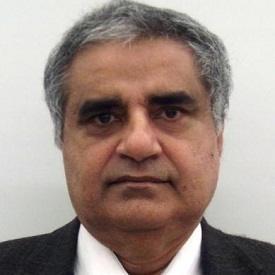
Dr. Sohail Mahmood is a political analyst in Chapel Hill, NC.
[1] Faisal AliandUrooba Jamal, Iran protests live: Unrest ‘stoked and fueled’ by foreign elements – Tehran”, Aljazeera, January 12, 2026, Iran says protests turned violent to justify possible US intervention, AFP/ReutersJanuary 12, 20267, https://tribune.com.pk/story/2586689/trump-iran-wants-talks-but-action-may-come-first; Jana Choukeir, Nayera Abdallah and Tala Ramadan, “Trump weighs response to Iran crackdown, Tehran says communication open with US”, Arab News, January 13, 2026, https://www.arabnews.pk/node/2629083/pakistan; BBC News, January 13, 2026, https://www.bbc.com/news/live/cj691w2e840t
Trump weighs strike options as he announces a 25% tariff on countries trading with Iran, BBC News, January 13, 2026, https://www.bbc.com/news/live/cj691w2e840t; Hira Humayun, “A morgue overflowing with more body bags than answers amid Iran’s latest crackdown on dissent”, CNN, January 13, 2026, https://edition.cnn.com/2026/01/12/middleeast/iran-kahrizak-tehran-morgue-protest-crackdown-dissent-intl-latam; Urooba Jamal and Caolán Magee, “Iran protests live: Tehran says it’s prepared for any move by Trump”, Aljazeera, January 13, 2026, https://www.aljazeera.com/news/liveblog/2026/1/13/iran-protests-live-tehran-says-its-prepared-for-any-move-by-trump; Sarah Shamim, “What we know about the protests sweeping Iran”, Aljazeera, January 12, 2026. https://www.aljazeera.com/news/2026/1/12/what-we-know-about-the-protests-sweeping-iran; Jana Choukeir, Nayera Abdallah and Tala Ramadan, “Trump weighs response to Iran crackdown, Tehran says communication open with US”, Reuters, January 13, 2026, https://www.reuters.com/business/media-telecom/trump-says-weighing-tough-response-iran-crackdown-says-tehran-called-negotiate-2026-01-12/
[2] Elwely Elwelly, “Iran official says 2,000 people have been killed in unrest”, Reuters, January 13, 2026, https://www.reuters.com/world/china/iranian-mp-warns-greater-unrest-urging-government-address-grievances-2026-01-13/
[3] Ibid
[4] Iran crises live: UN says, ‘cycle of horrific violence’ in Iran must end as Germany claims regime is in its ‘final weeks.’
The Guardian, January 13, 2026, https://www.theguardian.com/world/live/2026/jan/13/iran-protest-crackdown-regime-crisis-us-donald-trump-tariffs-latest-updates
[5] https://www.aljazeera.com/news/2026/1/12/trump-says-any-country-doing-business-with-iran-will-face-25-percent-tariff
[6] Iran prepared for war but open to talks as more than 500 reported killed in protests, CNN, January
12, 2026, https://edition.cnn.com/world/live-news/iran-protests-01-12-26
[7] https://tribune.com.pk/story/2586689/trump-iran-wants-talks-but-action-may-come-first
[8] https://www.theguardian.com/global-development/2026/jan/12/iran-protests-crackdown-toll-foreign-minister
[9] Iran says protests turned violent to justify possible US intervention, AFP/ReutersJanuary 12, 20267, https://tribune.com.pk/story/2586689/trump-iran-wants-talks-but-action-may-come-first
[10] Faisal Ali and Arooba Jamal, Iran protests live: Unrest ‘stoked and fueled’ by foreign elements – Tehran”, Aljazeera, January 12, 2026,
[11] https://tribune.com.pk/story/2586689/trump-iran-wants-talks-but-action-may-come-first
[12] https://tribune.com.pk/story/2586689/trump-iran-wants-talks-but-action-may-come-first
[13] Faisal Ali and Urooba Jamal, Iran protests live: Unrest ‘stoked and fueled’ by foreign elements – Tehran”, Aljazeera, January 12, 2026,
[14] https://www.arabnews.pk/node/2629083/pakistan
[15] EU eyeing further sanctions on Iran
The Guardian, January 12, 2026, https://www.theguardian.com/world/live/2026/jan/12/iran-protest-crackdown-us-donald-trump-latest-news-updates?filterKeyEvents=false&page=with:block-6964f9308f086f5496829211#block-6964f9308f086f5496829211
[16] Matt Tracy, “Some US senators skeptical about military options for Iran,” Reuters,
January 12, 202612:24 AM GMT+5Updated January 12, 2026, https://www.reuters.com/world/middle-east/some-us-senators-skeptical-about-military-options-iran-2026-01-11/
[17] Ibid
[18] Trump Holds off on Military Action Against Iran's Protest Crackdown as He 'Explores' Tehran Messages, Associated Press, Jan. 12, 2026, https://www.usnews.com/news/politics/articles/2026-01-12/trump-holds-off-on-military-action-against-irans-protest-crackdown-as-he-explores-tehran-messages
[19] Paul Adams, “The world waits to see how Trump will respond to Iran's violent protest crackdown,” BBC News, January 13, 2026, https://www.bbc.com/news/live/cj691w2e840t
[20] Austin Ramzy, “An Isolated Iran Finds China’s Friendship Has Limits,” Wall Street Journal, Jan. 13, 2026, https://www.wsj.com/world/an-isolated-iran-finds-chinas-friendship-has-limits-be947372
[21] Phil Stewart, Parisa Hafezi and Andrew Mills, “Iran warns of retaliation if Trump strikes, US withdraws some personnel from bases”, Reuters, January 15, 2026 https://www.reuters.com/world/china/death-toll-iran-approaches-2600-rights-group-reports-2026-01-14/
[22] Ibid
[23] Alayna Treene and Kevin Liptakm “Trump feels obligated to take action on Iran as administration weighs risks of retaliation”, CNN news, January 15, 2026, https://edition.cnn.com/2026/01/14/politics/trump-iran-action-retaliation
[24] Trump says” Iran has ‘no plan for executions’ as US weighs options against regime, CNN, January 14, 2026, https://edition.cnn.com/world/live-news/iran-protests-trump-01-14-26
[26] Ibid
[27] James Oliphant, “Five takeaways from the Reuters interview of President Trump,” Reuters, January 15, 2026, https://www.reuters.com/world/us/five-takeaways-reuters-interview-president-trump-2026-01-15/
[28] Saudi Arabia, Qatar, Oman convinced Trump to ‘give Iran a chance:’ Senior Saudi official, AFP, January 15, 2026, https://english.alarabiya.net/News/saudi-arabia/2026/01/15/saudi-arabia-qatar-oman-convinced-trump-to-give-iran-a-chance-senior-saudi-official
[29] Steve Holland, “Exclusive: Trump questions support for son of Iran's last Shah inside country,” Re3uters,
January 15, 2026, https://www.reuters.com/world/americas/trump-questions-reza-pahlavis-ability-garner-support-iran-2026-01-15/
on Gambrell, “Iran’s nationwide protests appear increasingly smothered after crackdown and internet outage”, Associated Press, January 15, 2026, https://apnews.com/article/iran-protests-crackdown-trump-us-flights-airspace-cba8a40c366f5bca855f465b6c717b25
[30] Ibid
[31] Ibid
[32] Parisa Hafezi and Steve Holland, “Trump sees Iranian crackdown easing, Tehran denies man to be executed”, Reuters,
January 15, 2026, https://www.aljazeera.com/news/2026/1/14/what-are-trumps-military-options-for-an-attack-on-iran
[33] Ibid
| Comments in Chronological order (0 total comments) | |
| Report Abuse |
| Contact Us | About Us | Donate | Terms & Conditions |


|
All Rights Reserved. Copyright 2002 - 2026