| Wed. February 18, 2026 |
 |
|
||
|
||||
| ||||


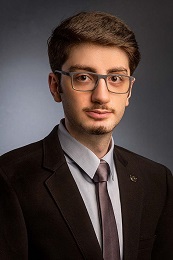
By Ali Karamifard
From the earliest days of the 1979 revolution, Iran’s Islamic regime and its rule have been shaped by governance without accommodation. Those who resisted found no place within the system’s formal boundaries. Yet dissent never disappeared. Across decades, it remained part of Iranian public life even when it could not appear openly.
Time did not soften this tension. Each attempt to suppress protest produced new networks of resistance and a sharper sense of where state power ended. Generations grew up knowing repression and defiance as ordinary facts of life. What emerged was not a passive society but a patient one, storing experience and waiting for opportunity.
That accumulation of pressure set the stage for the present moment. It culminated in events on Jan. 8 and 9, 2026, when streets across towns and cities became the scene of a political turning point. Those nights marked a shift in the relationship between the state and segments of the public.
Unlike previous uprisings, the current protests, under the leadership of Crown Prince Reza Pahlavi, follow a defined political course aimed at ending theocratic rule. Demonstrators no longer express rejection only through chants. They display the Iranian Sun and Lion flag, call the Crown Prince’s name, and dismantle regime symbols in public view.
The Islamic regime has not faced a position as fragile as the one it confronts now. Protests have occurred before, but the sudden appearance of large crowds across the country delivered a shock to the leadership. Facing this reality, Iranian authorities ordered a security crackdown.
Soon after, as reported by Time magazine, thousands were killed or injured while demanding freedom. Human rights groups describe the episode as one of the largest reported instances of state violence in Iran’s modern history. By its scale, the response exposed fear within the ruling circle.
At its core, power in Tehran rests on a doctrine that permits little internal challenge. That leaves limited space for adjustment when conditions shift. Over the years, the regime invested in proxy forces beyond Iran’s borders, presenting them as tools of deterrence and regional leverage. This strategy drained resources from domestic needs and weakened state institutions. As public trust eroded, authority came to rely increasingly on coercion.
That reliance on force has taken a sharper form. The Jerusalem Post reports that proxy networks once used to project influence abroad may have been deployed against Iranians themselves as protests spread. This suggests how far the regime is prepared to go to silence challenge.
When leaders turn armed force on the people they claim to govern, legitimacy begins to erode. A government that survives only through violence ceases to function as a guardian of order.
Václav Havel once wrote that all human suffering concerns each human being. In an age of instant communication, suffering in one nation is no longer a private affair but a shared duty of attention. No authority can claim ownership over human dignity, and when dignity is violated on a large scale, indifference becomes difficult to justify.
These state-led actions deserve attention beyond Iran’s borders. Those who stand for freedom carry a responsibility to give voice to the Iranian people and to recognize their losses. Wider international interests are implicated if indifference prevails.
A state willing to employ large-scale violence domestically raises concern about how it may behave externally, particularly as it advances missile and nuclear capabilities. The fate of the Iranian people is increasingly tied to broader questions of regional and international security.
The principle remains that a nation is the birthright of its people. Security forces exist to guard that birthright, not to threaten it when citizens seek to reclaim it. When these forces turn their arms on the people they were sworn to defend, legitimacy weakens. Even if resistance is forced into silence, memory endures and resolve gathers strength.
Historical precedent suggests such dynamics rarely remain contained.
Ali Karamifard is an independent researcher and writer based in Massachusetts. He is a graduate of social sciences and has developed a sustained interest in political authority, public resistance, and how states respond to dissent. His writing follows political change and power dynamics, with particular attention to developments in the Middle East. He has previously published commentary on political authority and protest movements.
Bibliography
- Iranian public opinion rallies around Reza Pahlavi as leader – opinion - https://www.jpost.com/opinion/article-883924
- Time Magazine – https://time.com/nextgen preview/7228edd7c55f97e885492382190da5ed793b2bc4232f62e28dc1fe33fca070ed/article/7357635/
- The Jerusalem Post - https://www.jpost.com/middle-east/iran-news/article-883718
- Human Rights Claim (Foreign Policy Article) -https://foreignpolicy.com/2026/01/16/iran-massacre-protesters-trump/
- Václav Havel Quote - https://www.goodreads.com/author/quotes/71441.V_clav_Havel
| Comments in Chronological order (0 total comments) | |
| Report Abuse |
| Contact Us | About Us | Donate | Terms & Conditions |


|
All Rights Reserved. Copyright 2002 - 2026