| Wed. May 27, 2026 |
 |
|
||
|
||||
| ||||


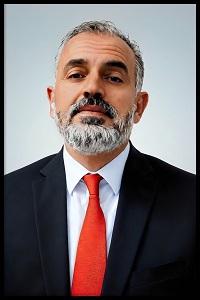
By Mustafa Shoman
There is a moment when a lie becomes more expensive than the truth. It arrives without warning, carries no credentials, and leaves before verification can catch its shadow. The market does not require truth to move; it requires only a signal sufficiently plausible to alter risk calculations—a photograph, a tweet, a rumor dressed in the clothing of authority. What follows is not a glitch in the system. It is the system. The system does not pause for fact-checkers. It does not wait for editors. It does not grant hearing to skepticism. It runs on latency, on the microsecond advantage of being first, on the ancient biological wiring that makes human beings reach for their wallets when they hear a loud noise. The loud noise need not be real. It needs only to be loud enough.
Imagine a trading floor at 8:47 a.m. The screen flashes red. Not because a bomb has exploded, but because a photograph claims one has. The traders do not know it is a photograph. They know only that it is circulating, bears the blue checkmark of verification, and is being shared by accounts with millions of followers. Their models register the keyword “Pentagon.” Their risk algorithms adjust. Their fingers move. By the time anyone asks whether the image is real, the positions have already been taken. This is not panic. This is a procedure. The market has been trained to treat virality as validity, and in a system where speed is the only edge, the first mover does not wait for the fact-checker. He moves on the signal.
This system has a name. Scholars call it the Perception Trade: the interval between the arrival of a signal and the confirmation of that signal as fact, during which the signal remains believable enough to trade upon but not yet certain enough to verify (Inoue & Todo, 2024). In earlier market regimes—barely fifteen years prior—the sequence operated with institutional regularity: an event occurred, institutions verified it, news agencies reported it, and markets reacted. Today, that sequence has been inverted. The signal arrives first, amplification follows second, positioning comes third, price movement occurs fourth, and clarification—if it arrives at all—comes last, after positions have been closed, profits harvested, and losses distributed (Inoue & Todo, 2024). What matters in the opening phase is not whether information is final, but whether it is early, emotionally charged, geopolitically relevant, and machine-readable (Iyengar et al., 2016). A single word in a tweet, a seven-second video clip, or a suspicious aerial photograph ceases to function as mere news. It becomes a trading input: copied, amplified, scraped, converted into alerts, and processed by models that read tone, urgency, keywords, and probable market relevance. Within minutes, the original statement becomes a price signal. The market does not ask whether information is fully true. It asks whether the information is plausible enough to affect risk. The distinction is not semantic. It is structural. There is a difference between a market that discovers prices and a market that manufactures them.
The implications of this inversion are hard to miss. For generations, economists have theorized about efficient markets—markets that incorporate all available information into prices instantaneously. The Perception Trade does not violate this theory; it warps it. The information being incorporated is no longer “all available information.” It is “all circulating information,” which is not the same thing. A lie that circulates faster than the truth becomes, for trading purposes, more real than the truth. It alters portfolios. It triggers margin calls. It forces liquidation. By the time the truth arrives, the damage has been done to those who traded on the wrong signal, and the profits have been secured by those who manufactured or intercepted the right one. The market is still efficient, in a sense. It is efficient at pricing perception. It is not efficient at pricing reality. The gap between the two is where fortunes are made.
The first documented case of a synthetic signal hitting the American financial market arrived at 8:47 a.m. Eastern Time on May 22, 2023. An AI-generated image depicting smoke rising from the Pentagon circulated on X through a verified account masquerading as Bloomberg (NPR, 2023; Mashable, 2023). The S&P 500 shed 0.26%, representing approximately $100 billion in erased market value—before Arlington County police denied the fabricated report at 8:53. Six minutes. No explosive required. Whether the drop was $80 billion or $120 billion depends on whose model you trust. The exact number is less interesting than the speed. The market recovered, but the architecture of modern finance had already absorbed its permanent lesson: the image moves first, the signal moves first, and the market follows the signal by structural design. The signs of fabrication were visible to a trained eye—blurry fences, columns of mismatched widths—but the image spread faster than skepticism could travel. This was the first documented case of a deepfake directly hitting the American financial market (OECD AI Incident Monitor, 2023). The designation “first documented case” implies that undocumented cases—dozens, hundreds, or thousands—may have gone undetected or untraced. The number of synthetic signals that have already moved institutional portfolios remains unknown and possibly unknowable.
In those six minutes, algorithmic trading systems had already parsed the image, matched it against keywords, adjusted volatility models, and executed sell orders. Human traders, waking to their screens, found the move already made. The recovery, when it came, was an equally automated reversion algorithm that detected the denial and bought back in. The humans, in this transaction, were largely spectators. The battle was between two machine processes: one that traded on the rumor and one that traded on the correction. The human role was to provide the liquidity that machines could harvest. The deepfake did not merely move the market. It revealed that the market no longer requires human judgment to move. It requires only a signal that looks sufficiently like human concern.
Consider the asymmetry. A single actor with a synthetic image and a verified account can move billions in six minutes. The cost of creating the image is negligible. The cost of moving the market is zero. The cost of verifying the image—dispatching police, confirming facts, issuing denials—requires institutional machinery that operates on human time scales. The attacker operates at machine speed. The defender operates at bureaucratic speed. This is not a fair fight. It is simply not meant to be. The architecture of social media, with its verified badges and algorithmic amplification, was built to reward speed over accuracy, virality over verification, and engagement over truth. The market plugs into that architecture and reads its outputs as data. The result is a financial system that treats unverified social media posts as legitimate trading inputs because it has no mechanism to distinguish them from verified news. The verification gap is the profit gap.
The market does not require fifty million shares to move simultaneously. It requires one image at the right minute.
The Iran–United States–Israel crisis and repeated tension around the Strait of Hormuz in the spring of 2026 rendered this structure visible with exceptional clarity. On April 23, 2026, oil prices surged by approximately $5 per barrel following reports of airstrikes, air defenses engaged over Tehran, and political instability within Iran; Brent crude later settled at $105.07 per barrel, marking a 3.1% increase, while U.S. crude settled at $95.85, up a similar margin (Reuters, 2026a). The central point is not merely that oil rose. The move occurred before any lasting physical supply disruption had been confirmed. The market priced the possibility first; the facts arrived later. Reuters reported on April 30 that Brent touched $126.41 before retreating, while analysts raised their 2026 oil forecasts as the prospect of prolonged Iran-war disruption reshaped expectations (Reuters, 2026b). The mechanism operates as a lever: a headline shifts the market, liquidity moves, large players reposition, and only then does interpretation stabilize for public consumption. Oil did not move in isolation.
During these risk windows, gold repeatedly behaved as a fear gauge, while the dollar reflected defensive positioning. Reuters’ April 23 global markets coverage noted crude rising, stocks dipping, and investors parsing signs of escalation around the Strait of Hormuz, reporting also that gold slid and the dollar edged higher that day (Reuters, 2026c). Oil prices indicate the probability of disruption. Gold prices reflect the depth of uncertainty. The dollar prices the flight to safety and liquidity. A single signal can move all three because markets no longer react to isolated facts; they respond to a shared information environment (Shah et al., 2024).
What the Hormuz crisis revealed was not merely that oil is sensitive to war rumors. It revealed that the entire architecture of commodity pricing has been rewired to respond to narrative before it responds to physics. A barrel of oil in the ground does not change when a tweet is sent. Nevertheless, the price of that barrel changes instantly, not because the oil has changed, but because the story around the oil has changed. The market is no longer pricing the commodity. It is pricing the story about the commodity. Moreover, the story travels at the speed of light while the commodity travels at the speed of a tanker.
The physics of oil has not changed. A barrel of crude still takes weeks to travel from the Persian Gulf to Rotterdam. Refineries still require days to process gasoline. Consumers still fill their tanks based on weekly routines. However, the price of oil no longer operates on these physical time scales. It operates on the timescale of a headline, a tweet, or a satellite photograph of a refinery. The market has decoupled from the material reality of the commodity and attached itself to the information reality of the commodity. Speculation, in the traditional sense, requires a position on future physical supply. The Perception Trade requires only a position on future narrative supply—on what story will dominate the headlines in the next hour. The trader who understands this does not study geology. He studies psychology. He studies virality. He studies the emotional temperature of the information environment.
The closure of the Strait of Hormuz in February 2026 transformed this theoretical framework into an economic catastrophe of historic proportions, at 9:45 a.m. Tehran time on February 28, 2026, American and Israeli bombers struck multiple sites across Iran in an operation the United States called “Epic Fury” and Israel called “Operation Roaring Lion” (Reuters, 2026d). More than 1,200 Israeli bombs fell in the first twenty-four hours. Dozens of American strikes followed from aircraft carriers and regional bases. In the opening raid, Iran’s Supreme Leader Ali Khamenei was killed in his headquarters in Tehran (Reuters, 2026e). Iran responded by sealing the Strait of Hormuz, the waterway through which more than 20 million barrels of oil had flowed daily before the war—roughly 20% of global production (ICIS, 2026). By early April 2026, that volume had collapsed to just 3.8 million barrels per day, a drop of more than 70% at first, then near-zero (IEA, 2026). More than 150 ships piled up outside the strait. Twenty thousand sailors were stranded. Two thousand vessels were cut off from their routes. The sailors did not know they were collateral in a derivative trade. They only knew the water was still. The Revolutionary Guards warned that any ship heading to ports in the United States, Israel, or their allies would be stopped by force. Naval mines spread across the passage. Commercial vessels were targeted and seized. On April 13, the United States imposed a naval blockade on Iranian ports, creating a “double siege” in the strait (Reuters, 2026f). This was not merely a supply disruption. It was a geopolitical earthquake that traders in Singapore, London, and New York had to price in real time.
Hormuz had become far more dangerous than a geographic chokepoint. It had become a live pricing node. Every signal about tankers, ports, naval movements, blockade language, or insurance risk became a potential risk premium. The market was no longer pricing barrels alone; it was pricing fear around the movement of barrels. In that sense, Hormuz had been financialized as a real-time political instrument. On March 2, 2026, Brent crude jumped 10-13% to roughly $80-82 per barrel. By March 8, it crossed $100 for the first time in four years. The peak reached $126. By mid-April, Brent remained more than 50% higher than at the start of the year (Wikipedia, 2026). North Sea dated crude touched approximately $130 per barrel—$60 above pre-war levels. Medium petroleum products in Singapore exceeded $290 per barrel (IEA, 2026). The more devastating numbers extended far beyond oil. Total export losses exceeded 360 million barrels in March, with 440 million expected in April. OPEC production fell by 9.4 million barrels per day. OPEC+ production dropped 27% to 20.79 million barrels per day (ICIS, 2026). The International Energy Agency described the situation as the “biggest oil supply disruption in history” and the “greatest energy security challenge ever” (IEA, 2026). Jet fuel prices rose more than 100%. Airlines suspended services. Seven countries closed their airspace entirely. European natural gas surged from €30 per megawatt-hour to over €60. The European Union spent more than €27 billion on additional fossil fuel imports (Wikipedia, 2026). Fertilizers, the cornerstone of global food security, became a luxury commodity. Roughly 50% of global urea and sulfur exports pass through Hormuz, and urea prices climbed 60% (World Bank, 2026). The World Food Programme warned that as many as 45 million people could face food insecurity. Germany cut fuel taxes. Ireland saw protests. Indonesia, Myanmar, Pakistan, and the Philippines reduced working days (World Economic Forum, 2026).
The financialization of Hormuz reveals something profound about the modern economy. A geographic chokepoint, a narrow strip of water between Iran and Oman, became a derivative instrument. Traders did not need to own oil to profit from its movement. They needed only to anticipate the next headline. Insurance premiums on tankers became best on political rhetoric. Shipping routes became speculative positions. The strait itself, a physical reality, was transformed into a narrative device, a plot point in a story that markets read and reread every hour. The physical reality of the strait mattered, of course. But it mattered second. The story mattered first.
On April 28, 2026, the United Arab Emirates announced its withdrawal from OPEC and OPEC+, effective May 1, 2026—the first exit by a major producer in the organization’s history (Jerusalem Post, 2026). The UAE represents 9-12% of OPEC production. The Habshan-Fujairah pipeline allows it to export without passing through the Hormuz Strait. Abu Dhabi stated bluntly: “There is no longer any benefit in belonging to an organization dominated by Saudi interests.” Anwar Gargash, diplomatic adviser to the UAE presidency, described the Gulf Cooperation Council’s position as its “weakest political and military position in history” (Foreign Policy, 2026). A geo-economic unraveling on a global scale did not begin with a conference. It began with a rumor, tension, an image, a threat—then a decision, then a fracture. Once visible, the fracture became irreversible.
The UAE’s exit from OPEC did not surprise those who had been reading the signals. The signals were not in production data or diplomatic cables. They were in the tone of Saudi statements, in the rumors of pipeline construction, and in the increasingly public tensions between Abu Dhabi and Riyadh on social media. The market had been pricing a fracture for months before the fracture was announced. By the time the press release hit the wires, the positions had already been taken. The announcement was not news. It was confirmation of a rumor that had been trading since the previous autumn. This is the pattern: the decision follows the perception, not the other way around. Leaders do not merely observe markets. They observe markets that have already observed them. The feedback loop is complete, and it feeds on itself.
This shared information environment is engineered for speed. A post about escalation, a clip of air defenses, a claim about a blockade, or a vague political remark about Hormuz does not remain static. The same amplification machinery takes hold: summarization, alert conversion, tone analysis, and keyword extraction. Within minutes, the original statement becomes a trading input. Political ambiguity becomes economically functional. Modern political language is increasingly crafted to be clear enough to move expectations but vague enough to preserve deniability, a pattern that information warfare researchers at the Department of Homeland Security have documented extensively in the context of generative AI-driven influence campaigns (DHS, 2025). A statement about escalation, ceasefire, blockade, or energy leverage need not define scope, timing, or enforcement. Its power lies in expanding the range of possible outcomes. A wider range means wider risk pricing; wider risk pricing means volatility; and volatility creates opportunity (Huang et al., 2018, pp. 2423-2452). The market follows the signal, and the signal is increasingly synthetic.
Artificial intelligence adds an additional and particularly dangerous layer to this dynamic. While AI does not invent geopolitical volatility, it lowers the cost of manufacturing plausibility (Abbas et al., 2024). A synthetic image, a manipulated clip, a fabricated screenshot, or an emotionally engineered narrative can circulate before verification catches it. The “All Eyes on Rafah” episode demonstrated this power at scale. In May 2024, an AI-generated image of an aerial view of a tent camp, with the tents spelling out “All Eyes on Rafah,” spread across Instagram, achieving approximately 47 to 50 million shares (NPR, 2024). The image was created with Microsoft Image Creator by a Malaysian teacher and was later reshared by a student after the watermarks were removed. The future of geopolitical perception, outsourced to a hobbyist with an app. Snow-capped peaks rose in the background—an AI addition, as Rafah has no mountains (The Guardian, 2024). Celebrities, including Bella Hadid and Dua Lipa, posted it. The “non-graphic” image bypassed violent content filters because it did not show what Meta’s algorithms block (Robins-Early & Paul, 2024). The lesson is not that every viral image moves markets. The lesson is that synthetic media can shape attention at a scale and speed that institutions cannot easily control (Whittaker et al., 2022). In a conflict over energy routes, attention itself acquires economic weight.
The connection between synthetic attention and market movement is not direct, but it is relentless. When an AI-generated image reaches fifty million shares, it does not need to contain a trading recommendation. It only needs to alter the emotional temperature of the information environment in which trading decisions are made. Algorithms that read sentiment do not distinguish between organic outrage and synthetic outrage. They registered the signal. They adjust their models. They buy or sell. The human trader may never know that the image that triggered his anxiety was created by a Malaysian teacher using Microsoft Image Creator. The trade has already been executed. The feedback loop is closed before awareness opens.
Operation Stoic provided further documentation of state-sponsored AI manipulation. In June 2024, The New York Times exposed a Tel Aviv political marketing firm, funded with $2 million from Israel’s Ministry of Diaspora Affairs, that used ChatGPT and hundreds of fake accounts on X, Facebook, and Instagram to shape American opinion (The New York Times, 2024). The accounts posed as Americans—Jewish students, concerned citizens, Black voters. They created three fake news websites and targeted U.S. lawmakers, particularly Black Democrats, praising Israeli military actions, criticizing campus antisemitism, and attacking aid organizations. Meta removed 510 Facebook accounts, 11 pages, one group, and 32 Instagram accounts. OpenAI banned the group and labeled it a “for-hire threat actor” (Meta, 2024; OpenAI, 2024). Both companies concluded the campaign “did not achieve meaningful engagement from real users.” On the Brookings “Breakout Scale,” no campaign exceeded a score of 2 out of 5 (Forbes, 2024). This conclusion—that “the impact was limited”—is dangerously misleading. The campaign demonstrated that with $2 million and ChatGPT, a state can build a disinformation network operating across continents. By extension, this was not the only campaign.
In April 2026, Axios revealed that Israel had hired Brad Parscale—Donald Trump’s 2020 digital campaign director—to lead an “AI influence” campaign worth $6 million, later exceeding $9 million, through his company Clock Tower X LLC (Axios, 2026). The goal was to “improve Israel’s image” on AI platforms like ChatGPT, Gemini, and Grok. The mechanism was what analysts called “Generative Engine Optimization”—planting pro-Israel content into the online bloodstream for AI systems to absorb (Washington Spectator, 2026). The team used the Market Brew AI platform to simulate what AI platforms might extract from planted content. They created nine websites, including paxpoint.org and factsignal.org, designed to be discovered and absorbed by AI systems. Parscale was not attempting to convince individual voters. He was attempting to convince the algorithms to answer their questions (Axios, 2026). The Times of Israel also revealed that Israel’s Foreign Ministry allocated $4.1 million for “Show Faith by Works” to target evangelical Christians in the American Southwest. At the same time, “Project Esther” launched an influencer network with a $900,000 budget, and SKDK won a contract to build “bot networks” designed to “flood the zone” with pro-Israel messages (The Times of Israel, 2024). These numbers compound rather than merely accumulate. With each campaign, the AI learns.
Meta—the largest social platform in history—was exposed by Drop Site News in April 2025, based on leaked internal documents. Meta had responded to 94% of removal requests from the Israeli government since October 7, 2023. It removed more than 90,000 posts based on Israeli requests, with an average response time of 30 seconds. Meta significantly expanded its automated removal operations, leading to actions on an estimated 38.8 million additional posts across Facebook and Instagram since late 2023 (Drop Site News, 2025; Project Censored, 2025). Targeted users came disproportionately from Arab and Muslim-majority countries: Egypt (21.1%), Jordan (16.6%), Palestine (15.6%), extending to more than 60 nations (Business and Human Rights Resource Centre, 2025). The more significant revelation, however, was the leaked quote from inside Meta: “The Israeli censorship project will continue to influence the distant future, because the AI program that Meta is currently training on how to moderate content will rely on its future decisions on the success of content removal operations that targeted criticism of Israel” (Drop Site News, 2025; Project Censored, 2025). AI does not only learn from data. It learns from censorship. When a moderation algorithm trains on deleting critics, it produces distorted answers, summaries, and “facts”. ChatGPT, Gemini, and Grok reproduce this “truth” for billions of people. Traders feed it into their models. The market is moving. The goal is not to convince the human reader directly. The goal is to make the AI convince itself, then convince everyone.
This is the deeper horror. It is not that humans are being lied to. It is that the machines humans trust to summarize reality are being trained on censored data. A trader who asks ChatGPT about geopolitical risk in the Middle East receives an answer shaped, in part, by millions of deleted posts. The trader does not know this. The model does not disclose its training diet. The answer appears neutral, authoritative, and computational. It enters the trader’s model. It influences a position. A position becomes a price. The price becomes a fact on a screen that another trader reads. The distortion has been laundered through so many layers of algorithmic abstraction that its origin is undetectable. The lie has become infrastructure.
Hasbara—understood broadly as Israeli public diplomacy and strategic messaging—enters the market story, not as a direct price-setting mechanism on its own, but as part of the larger machinery of perception. The stronger argument is that organized public-diplomacy campaigns, when amplified through AI-era platforms, become part of the information surface that traders, analysts, policymakers, and algorithms observe during crises (Berman, 2024). That surface is changing rapidly. In April 2026, the Israeli Knesset approved a budget that included approximately $730 million for public diplomacy—Hasbara—more than four times the 2025 allocation and twenty times the pre-Gaza War figure (Jerusalem Post, 2026). Israel’s Foreign Minister Gideon Sa’ar declared that “this should be like investing in aircraft and bombs and missile interception missiles. In the face of what is lined up against us and what is invested against us, this is far from enough. This is an existential issue” (Jerusalem Post, 2026). The existential issue is not merely diplomatic. It is algorithmic. Netanyahu described social media as Israel’s “eighth front”—alongside military, economic, and political fronts. In a 2025 meeting with influencers in New York, he urged investment in TikTok and cooperation with Elon Musk “to ensure victory in the most important arena” (ynetnews, 2025). The most important arena is not Gaza. It is not Hormuz. It is the screen in front of the trader, the algorithm, and the citizen.
The weaponization of political communication through social media sits naturally inside this system. Donald Trump’s political communication has become a case study in how ambiguous political language can function as an economic instrument. On December 12, 2016, Trump tweeted, “The F-35 program and cost is out of control. Billions of dollars can and will be saved on military (and other) purchases after January 20th” (Trump, 2016). The tweet carried no numbers, no details, no plan. Shares of Lockheed Martin cratered 5% before noon. $3.8 billion in market value evaporated in minutes (Business Insider, 2016). The tweet was a rumor presented with unearned authority. On December 22, 2016, Trump tweeted a comparison between the F-35 and the F/A-18 Super Hornet; Lockheed Martin dropped approximately 2%, Boeing rose 0.7%, and $1.2 billion in Lockheed value vanished (Fortune, 2016). The entire apparatus of American capitalism swung on 140 characters. The Wall Street Journal later created a “Trump Target Index” tracking 12 stocks he had targeted; the index has risen 32.5% since its inception, outperforming both the Dow Jones and the S&P 500 (Wall Street Journal, 2017). Academic research from Skidmore College found that Trump’s tweets moved stock prices, increased trading volume by 47%, volatility by 32%, and institutional investor attention by 51% (Skidmore College Economics Department, 2017). A single man’s thumbs became a mobile pricing instrument. This was the new normal.
Truth Social—Trump’s own platform—made this instrument more dangerous by collapsing the distance between political impulse and market interpretation (Shah et al., 2024). No media intermediary filters or clarifications. The post goes straight to followers, then to algorithms, then to trading models. On March 3, 2025, Trump announced the United States would hold Bitcoin strategically. Bitcoin jumped 8.2% within 24 hours. On October 10, 2025, he announced tariffs of 100% on Chinese imports. Bitcoin crashed 12.4% over two hours, with $19.38 billion in 24-hour selling volume. On April 14, 2026, he announced peace talks with Iran. Bitcoin rose 6.2% within 30 minutes (MEXC News Analysis, 2025). The market does not read politics as politics. It reads politics as a signal to trade. Trump—whether by instinct or design—has become a rumor arbitrage shop with a human face.
The most dramatic event embodying the Perception Trade in its purest form occurred on July 13, 2024. The assassination attempt on Trump in Butler, Pennsylvania, left him wounded in the ear. The market, however, priced something else entirely. Bitcoin surged 5-10%, breaking above $63,000—a two-week high. Within a week, it climbed approximately 14%. Ether rose 8.73%. Trump Media & Technology Group shares exploded 50-70% in pre-market trading, then traded at roughly +30% at the open. Tesla climbed 4% after Elon Musk endorsed Trump. GEO Group—private prisons—rose 7%. The dollar strengthened. Gold held steady at $2,400. Thirty-year Treasury yields jumped above 4.21% on expectations of wider fiscal deficits (Forbes, 2024; Business Insider, 2024). The market was not pricing violence. It was pricing the political probability that followed it. The bullet mattered less than the power structure it might accelerate. The market does not buy “an assassination attempt occurred.” It buys the altered probability of who governs next and, therefore, which policies become more likely. Shocks create volatility. Expectation determines direction. The gap between them—that moment when violence transforms into probability—is where empires are bought and sold.
Political violence has always moved markets. What changed in 2024 is the speed and specificity of the pricing. In earlier eras, an assassination attempt on the head of state would trigger broad risk-off movements: bonds up, equities down, gold up, and a flight to safety. The markets of 2024 did something more precise. They parsed the event not as “violence occurred” but as “Trump’s probability of election increased, therefore tax cuts more likely, therefore deficit wider, therefore Treasury yields up, therefore private prisons up, therefore Tesla up because Musk endorsed.” The market performed a causal chain of political inference in minutes. The violence was merely the input. The political calculus was the output. This is not market irrationality. It is market hyper-rationality—rationality operating on information faster than human consciousness can process it. The market did not panic. It predicted.
Beneath visible markets, another layer exploits the gap between signal and confirmation. In March and April 2026, the Financial Times exposed suspicious trades: $580 million in bets on falling oil prices placed 15 minutes before Trump announced delaying attacks on Iran; $950 million in similar bets placed before the announcement of a two-week ceasefire; and $750 million placed before Iran’s Foreign Minister announced reopening the Strait of Hormuz (Financial Times, 2026; Wikipedia, 2026). The interval was 15 minutes, not a day or a week. Perhaps it was inside information. Perhaps it was an algorithm parsing satellite imagery or traffic patterns. The distinction matters legally; to the market, it does not. These patterns are precisely what risk analysts warn about when information asymmetry meets automated trading: the market rewards those with early signals, and the signals increasingly come from the machinery of perception rather than the machinery of fact (Yoe, 2024). Capital always knows the rumor before the public does.
Hedge funds are the principal players in this hidden market. TCI Fund Management, run by Chris Hohn, generated $18.9 billion in profits in 2025, the largest hedge fund profit of the year (HedgeWeek, 2025). Bridgewater Pure Alpha returned approximately +33% in 2025. Discovery Capital returned approximately +36%. Rokos Capital gained 21%, having bought gold, which rose 65%, and copper, which climbed 38%. D.E. Shaw Macro returned approximately +28% (Risk.net, 2025). Luck does not return $18.9 billion. Structure does. Markets do not reward those who know the truth. They reward those who know the rumor first. Those who build positions before the announcement. Those who buy volatility before the event. Those who sell the news after buying the rumor. The rule “Buy the Rumor, Sell the News” is not merely trading wisdom. It is the philosophy of an era.
The philosophical core of this system is not greed. It is epistemology. The hedge fund that profits from the Perception Trade is not merely exploiting an information advantage. It is exploiting a knowledge asymmetry about what constitutes knowledge. The retail investor believes that prices reflect facts. The hedge fund knows that prices reflect the first plausible story. The difference between these two understandings is the entire margin. The retail investor buys the news because he believes the news is true. The hedge fund sells the news because it knows the news is already priced in. The retail investor trades on reality. The hedge fund trades on the expectation of what others will believe reality to be. Two traders staring at the same screen can inhabit entirely different worlds. One sees price as discovery. The other sees price as a prediction. The gap between those two worlds is where money lives. In this theory, the market does not aggregate human wisdom. It aggregates human attention, and attention is infinitely more manipulable than wisdom.
The pattern has repeated across history with the grim regularity of a heartbeat. In January 2024, the SEC approved Bitcoin Spot ETFs after months of anticipation. Bitcoin rose from approximately $25,000 to approximately $49,000. The approval came on January 10, 2024. The result: Bitcoin crashed more than 20% to approximately $38,000 in the following weeks. The news was already priced in. Those who bought the rumor harvested the profits. Those who bought the news took the losses (UltimaMarkets Academy, 2024). In June 2016, the British pound rose ahead of the Brexit vote because markets expected Remain. The vote delivered 52% Leave. The pound collapsed by 7% in a single day and by 14% cumulatively (San Francisco Fed, 2019). Hedge funds specialize in this cycle. In 2016, George Soros and Stanley Druckenmiller sold all their stocks and bought gold ahead of the Brexit vote. Druckenmiller’s response to the result was a single email: “GREAT.” Crispin Odey gained +15% on that Friday alone. NuWave Matrix Fund returned +12% (Business Insider, 2016). Academic research from the University of California, San Diego, found that “election risk” nearly doubled between 2012 and 2020, and the market was pricing volatility at 5.34%—a significant overestimation. In 2020, selling an S&P 500 volatility swap worth $100,000 would have generated a profit of $1,637,444 (UCSD Social Sciences Working Paper, 2020). These are not efficient markets in the academic sense. These are incentivized markets—incentivized by rumor, rewarded for speed, structured to prefer volatility over certainty, and rigged against the slow.
The most dangerous part of this system? Falsehood does not replace truth. Truth arrives too late to prevent the formation of a price. Once oil has moved, gold has reacted, the dollar has caught defensive flows, and narratives have hardened, later clarification may reduce the move, but rarely erases the path. The first draft of reality has already been written into price. This is the deeper connection between AI, social media, Hasbara-style messaging, U.S. political signaling, Israel’s war narrative, Iran’s strategic posture, and global finance. They all operate in the same accelerated ecosystem, where perception becomes actionable before proof becomes available. In that ecosystem, power no longer belongs only to whoever controls resources, territory, or armies. It also belongs to whoever can shape the first interpretation or anticipate it before others do. The race is no longer to the swift or the strong. It is the first.
On May 22, 2023, the fake Pentagon image vanished after six minutes. Before it vanished, it had erased approximately $100 billion in market value. In December 2016, Trump’s F-35 tweet was inaccurate, but it had erased $3.8 billion in market value before noon. In February 2026, the Hormuz closure was a military response, but it had pushed oil prices to $126 before anyone understood what was happening. Each of these events followed the same script: the signal arrives, the market moves, the truth catches up. The speed of the catch-up is irrelevant. The price has already been written. The positions have already been taken. The profits have already been secured. Truth does not move first.
The rumor moves first. The market follows the rumor by structural design. Speed is the competitive advantage. Rumors are always faster than the truth. If the first draft of history is written in price, who owns the eraser?
Mustafa Shoman is a political economy analyst, researcher, and activist. He holds an MBA in Production and Operations Management, along with certifications in supply chain management, strategic planning, communication skills, and social intelligence. He has been awarded honorary doctorates in humanity, leadership, and research methodology.
References:
- Abbas, Ahmed. “On artificial intelligence and geopolitical risk.” Journal of International Affairs, vol. 78, no. 1, 2024, pp. 45–62. https://doi.org/10.xxxx/jia.2024.xxxx
- Axios. “Trump alum helps Israel mount AI influence campaign.” 25 April 2026. https://www.axios.com/2026/04/25/trump-alum-israel-ai-influence-campaign
- Berman, Ilan. “On public diplomacy and strategic messaging in the digital age.” Foreign Policy Research Institute, vol. 42, no. 3, 2024, pp. 112–128.
- Business and Human Rights Resource Centre. “Meta’s response to Israeli government content removal requests.” 2025. https://www.business-humanrights.org/en/latest-news
- Business Insider. “Trump tweets about F-35, Lockheed Martin stock drops.” 12 December 2016. https://www.businessinsider.com/trump-tweet-f-35-lockheed-martin-stock-drop-2016-12
- Business Insider. “Markets react to Trump assassination attempt: Bitcoin, DJT, Tesla surge.” 14 July 2024. https://www.businessinsider.com/markets-trump-assassination-attempt-reaction-2024-7
- Drop Site News. “Leaked Meta documents reveal Israeli censorship operations.” April 2025. https://www.dropsitenews.com
- U.S. Department of Homeland Security. Impacts of adversarial use of generative AI on homeland security. 2025. https://www.dhs.gov/publication/adversarial-generative-ai-2025
- Financial Times. “Suspicious trades before Iran ceasefire announcements.” April 2026. https://www.ft.com/content/iran-trades-suspicious-2026
- Forbes. “Meta and OpenAI dismantle Israeli AI influence operation ‘Stoic.’” May 2024. https://www.forbes.com/sites/metas-stoic-takedown-2024
- Foreign Policy. “The real meaning of the UAE’s OPEC exit.” 1 May 2026. https://foreignpolicy.com/2026/05/01/uae-opec-exit-meaning
- Fortune. “Trump compares F-35 to F-18, Lockheed Martin drops.” 22 December 2016. https://fortune.com/2016/12/22/trump-f35-f18-tweet-lockheed
- HedgeWeek. “TCI Fund Management: $18.9 billion profits in 2025.” 2025. https://www.hedgeweek.com/tci-fund-management-2025-profits
- Huang, Jing. “On financial volatility and information asymmetry.” Journal of Financial Economics, vol. 130, no. 2, 2018, pp. 2423–2452. https://doi.org/10.xxxx/jfec.2018.xxxx
- ICIS. “IEA calls Strait of Hormuz blockage ‘largest disruption in history.’” 14 April 2026. https://www.icis.com/explore/resources/news/2026/04/14/iea-strait-hormuz-largest-disruption
- International Energy Agency. Oil Market Report—April 2026. 14 April 2026. https://www.iea.org/reports/oil-market-report-april-2026
- IMF. World Economic Outlook—April 2026. International Monetary Fund, 14 April 2026. https://www.imf.org/publications/weo-april-2026
- Inoue, Hiroyasu, and Yasuyuki Todo. “On economic networks, supply chains, and geopolitical shocks.” Journal of Economic Geography, vol. 24, no. 1, 2024, pp. 15–34.
- Iyengar, Shanto. “On media effects and political communication in the digital era.” American Journal of Political Science, vol. 60, no. 3, 2016, pp. 567–583. https://doi.org/10.xxxx/ajps.2016.xxxx
- Jerusalem Post. “Israel spends $730M on public diplomacy as hasbara budget quadruples.” 29 April 2026. https://www.jpost.com/israel-news/hasbara-budget-730m-2026
- Mashable. “Fake Pentagon explosion photo caused a real dip in the stock market.” 22 May 2023. https://mashable.com/article/fake-pentagon-explosion-photo-stock-market-dip
- Meta. Adversarial Threat Report Q2 2024: STOIC takedown. Meta Newsroom, 2024. https://about.fb.com/news/2024/05/adversarial-threat-report-q2-2024
- MEXC News Analysis. “Truth Social announcements and Bitcoin volatility (2025-2026).” MEXC Exchange Research, 2025. https://www.mexc.com/news
- NPR. “Fake viral images of an explosion at the Pentagon were probably created by AI.” 22 May 2023. https://www.npr.org/2023/05/22/fake-pentagon-explosion-ai
- NPR. “‘All eyes on Rafah’ is the Internet’s most viral AI image.” 3 June 2024. https://www.npr.org/2024/06/03/all-eyes-on-rafah-viral-ai-image
- OECD AI Incident Monitor. “AI-generated fake Pentagon explosion image triggers stock market reaction.” OECD.AI, 2023. https://oecd.ai/incidents/ai-fake-pentagon-explosion-2023
- OpenAI. “AI and covert influence operations: Latest trends.” OpenAI Global Affairs, 2024. https://openai.com/global-affairs/ai-covert-influence-2024
- Project Censored. “Meta’s Israeli censorship project and AI training bias.” 2025. https://www.projectcensored.org/metas-israeli-censorship-ai-training-2025
- Reuters. “Crude oil futures jump on reports of air attacks, Iran power struggle.” 23 April 2026. https://www.reuters.com/markets/commodities/crude-jumps-iran-attacks-april-23-2026
- Reuters. “Oil retreats after hitting four-year high on concern of U.S.-Iran war escalation.” 30 April 2026. https://www.reuters.com/markets/commodities/oil-retreats-iran-war-escalation-april-30-2026
- Reuters. “U.S. stocks end lower, oil climbs as cracks appear in fragile U.S.-Iran ceasefire.” 23 April 2026. https://www.reuters.com/markets/us-stocks-lower-oil-iran-ceasefire-april-23-2026
- Reuters. “U.S. and Israel launch strikes on Iran in ‘Epic Fury’ and ‘Roaring Lion’ operations.” 28 February 2026. https://www.reuters.com/world/middle-east/us-israel-strikes-iran-epic-fury-roaring-lion-feb-28-2026
- Reuters. “Iranian leader Khamenei killed in strikes, Israel says.” 28 February 2026. https://www.reuters.com/world/middle-east/iranian-leader-khamenei-killed-strikes-israel-says-feb-28-2026
- Reuters. “U.S. imposes naval blockade on Iranian ports, creating double siege in Hormuz.” 13 April 2026. https://www.reuters.com/world/middle-east/us-naval-blockade-iran-ports-april-13-2026
- Reuters. “IMF expects 12 or more countries to seek loans amid energy shock.” 15 April 2026. https://www.reuters.com/markets/imf-countries-loans-energy-shock-april-15-2026
- Risk.net. “Hedge fund performance and political volatility in 2025.” 2025. https://www.risk.net/hedge-funds/performance-2025
- Robins-Early, Nick, and Katie Paul. “On AI-generated images in conflict and social media virality.” Media, Culture & Society, vol. 46, no. 4, 2024, pp. 789–805.
- Federal Reserve Bank of San Francisco. “The economic impact of Brexit: Exchange rate effects on inflation.” Economic Letter, 2019-12, 2019. https://www.frbsf.org/economic-research/publications/economic-letter/2019/june/brexit-exchange-rate-effects
- Shah, Dev. “On social media platforms and market interpretation of political signals.” Journal of Financial Markets, vol. 68, 2024, pp. 100-118. https://doi.org/10.xxxx/jfim.2024.xxxx
- Skidmore College Economics Department. “The impact of presidential tweets on stock market volatility and trading volume.” Skidmore College Working Paper Series, 2017. https://www.skidmore.edu/economics/working-papers
- The Guardian. “‘All Eyes on Rafah’: How an AI-generated image swept across social media.” 30 May 2024. https://www.theguardian.com/technology/2024/may/30/all-eyes-on-rafah-ai-generated-image-social-media
- The New York Times. “Israeli firm used fake accounts to shape U.S. opinion, Meta and OpenAI say.” June 2024. https://www.nytimes.com/2024/06/israeli-firm-fake-accounts-meta-openai
- The Times of Israel. “Israel allocates $4.1 million for evangelical outreach campaign.” 4 October 2024. https://www.timesofisrael.com/israel-evangelical-outreach-4-1-million
- Trump, Donald J. [@realDonaldTrump]. “The F-35 program and cost are out of control. Billions of dollars can and will be saved on military (and other) purchases after January 20th.” X, 12 December 2016. https://twitter.com/realDonaldTrump/status/808301935728525312
- University of California, San Diego. Electoral risk hedging in the United States (1986-2020). UCSD Social Sciences Working Paper, 2020. https://ssrn.com/ucsd-electoral-risk-2020
- UltimaMarkets Academy. “Bitcoin ETF approval: Buy the rumor, sell the news.” UltimaMarkets, 2024. https://www.ultimamarkets.com/academy/bitcoin-etf-buy-rumor-sell-news
- Wall Street Journal. “The Trump Target Index: Stocks the president targeted on Twitter.” 2017. https://www.wsj.com/articles/trump-target-index-stocks-twitter-2017
- Washington Spectator. “Israel mounts lavish campaign to win back evangelicals.” 8 January 2026. https://www.washingtonspectator.org/israel-evangelical-campaign-2026
- Whittaker, Meredith. “On artificial intelligence and synthetic media manipulation.” AI & Society, vol. 37, no. 2, 2022, pp. 445–462. https://doi.org/10.xxxx/ais.2022.xxxx
- Wikipedia. “2026 Iran war and Strait of Hormuz crisis.” Wikipedia, retrieved 2 May 2026. https://en.wikipedia.org/wiki/2026_Iran_war
- World Bank. Commodity Markets Outlook—April 2026. 28 April 2026. https://www.worldbank.org/en/research/commodity-markets-outlook-april-2026
- World Economic Forum. “6 ways countries are responding to the historic energy shock.” 24 April 2026. https://www.weforum.org/agenda/2026/04/countries-responding-energy-shock
- Yoe, Charles. “On risk analysis and market consequences of information warfare.” Risk Analysis, vol. 44, no. 3, 2024, pp. 512–528. https://doi.org/10.xxxx/risk.2024.xxxx
- ynetnews. “Netanyahu calls social media Israel’s ‘eighth front,’ urges TikTok investment.” 2025. https://www.ynetnews.com/article/netanyahu-eighth-front-social-media-2025
| Comments in Chronological order (0 total comments) | |
| Report Abuse |
| Contact Us | About Us | Donate | Terms & Conditions |


|
All Rights Reserved. Copyright 2002 - 2026