| Sat. June 06, 2026 |
 |
|
||
|
||||
| ||||


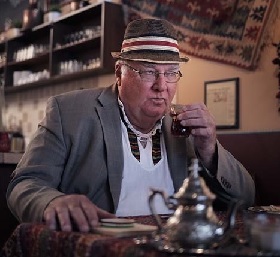
By Dr. Bruce Mabley and Thaer Alhajj
Seventeen months have passed since the collapse of the Bashar al-Assad regime in Syria. Celebrations have ceased, Bashar and his family are in exile in Moscow and the new interim Syrian government has been put in place. Some diaspora Syrians, activists and refugees, have returned from exile.
It is now time to take the pulse of the political situation on the ground in order to assess whether the current administration has made life easier and freer for the average Syrian. Much blood has been spilled to achieve this goal. It is imperative that the sacrifice of Syrians be respected and retained as a guiding light for the new government.
Specifically, we need to ask the following questions: to what degree has the current government sought to repair any damage or injury to ethnic and religious minorities? In what measure has the interim government sought inclusiveness from Syrians without which no progress towards the values of democratic inclusiveness can be made?
No one expects the new regime to abolish with a magic wand the decades of ethnic and political violence that the despised Assad family nurtured in order to continue its illegitimate power. Much hard work lies ahead – establishing a new active role for civil society, including minorities in positions of real power, repairing the war damage, rebuilding the economy and opposing foreign proxies seeking to interfere in the building of democratic statecraft.
The present Syrian government is headed by Ahmed al-Charaa or Al-Jolani, his nom de guerre. Until 2016, an al-Qaida operative, he then became leader of the Hay’at Tahrir al-Sham resistance group. Born and raised in KSA, his father was involved in the oil business. His transfer to Syria in 1989 as an advisor to the Assad government on oil matters allowed his son to learn first-hand about the country of which he was a citizen but where he had never lived.
For al-Jolani, his return to Syria was not without transformations. It heralded his progressive radicalization. This process coincided with a four-year spell in an Iraqi prison in 2005 (Abu Ghraib prison) during the American occupation. While in prison, al-Jolani meets jihadists like Al-Baghdadi, leader Islamic State and others. This daunting experience prepared him as an Al-Qaida operative.
Arab spring in 2011
Syria is a country that has been a coveted territory throughout history. It is strategically located astride the major commercial trading route linking East and West. For the Ottomans, Syria was a key trading and military springboard leading into the Levant and on to Africa and the Arabian Gulf.
As such, Syria has changed hands often and remains under the influence of various proxy states and other regional movements. This was evident during the 2011 Arab spring in Syria when the Free Syrian Army and its commanders were begging for material and lethal aid from Western governments. Their collective refusal forced commanders to negotiate with Salafist Gulf agents during battles for arms and material assistance.
So, in the wake of President Obama’s chemical warfare red line hoax and Western apathy, the rebels turned to the representatives of political Islam for material aid. Al-Jolani was one of these commanders.
This is a consequence of not assisting the democratic youth opposition under the pretext that they may be Islamic radicals. The irony is that this very rationale was turned on its head and produced the opposite of what the West thought they had avoided. Western dilly dallying would have disastrous consequences for the conduct and outcome of the Syrian uprising. The rise of Islamic State and other radical Islamist organizations is one of those unhappy consequences.
Despite these difficulties, and the harsh reaction of the Syrian state authorities, the rebels were on the eve of victory in 2015 when Russia and Iran rushed to the defense of the exhausted Assad army. Foreign hands, once again, determined the future of Syria. Russian bombs reduced cities like Aleppo to ashes. Pro-Assad Hezbollah forces on the ground re-occupied most of the country with the exception of a northern tranche along the Turkish border.
The seeds of discontent could be observed during the uprising as the rebel tent accommodated a number of minorities including the Kurds and Christians. By forcing commanders like al-Jolani to deal with the Islamists, the Syrian rebellion cut itself off from one of its major values – inclusiveness. After all, the Bashar regime was almost universally bad for Syrians regardless of their civil status.
The lack of inclusiveness that hampered rebel unity has reared it ugly head in the business of the new interim government. For many activists, this is the main reason why the fall of the Bashar al-Assad regime has coincided with a growth in the foreign influence of both Turkey and Qatar over the new Syrian regime.
Syrian nationalism
Contrary to some Western geopolitical analysts, Syria is mainly a modern secular country. Islam and secularism co-exist in relative harmony. Fears of radical Islamism are overplayed sometimes by proxy powers for effect or by Western powers unwilling to made a sustained geopolitical effort to exert pressure to support their regional allies.
Among the variables that held the rebellion together despite adversity of great magnitude is Syrian nationalism. Observers rightly saw that if the rebellion was to succeed, nationalism and national feeling were to be the glue holding the coalition together. One of the major tests of the new interim government will be to tap into this nationalist sentiment in order to build a legitimate state for all Syrians.
So far, this has not happened. Al-Jolani’s links to KSA and Salafism may have cast the question of Syria’s future as a stark choice between Islamic paternalism and democratic inclusiveness. Salafism divides ethnically diverse polities instead of unifying their disparate parts. Turkish support for al-Jolani’s regime is predicated on their war on Kurds. As such, the Syrian interim regime can hardly point to the Kurds as part of its so-called inclusivity. Turkish foreign policy must coincide with Syrian state compliance on the Kurdish question.
Israeli Moves
From an Israeli perspective, turning Syria into another Lebanon makes eminent sense. The phantasmagoria of ethnic, linguistic and religious minorities enhances the invading power’s chances at a divide and conquer strategy. If we look at recent history, Israel is quite comfortable dealing with a dictatorship. This is also the case with dictators like Assad, Saddam Hussein and Egypt’s Mubarak and el-Sissi.
To ensure that the interim government in Damascus has the ‘right’ regional compass, Israel has recently annexed even more of Syrian territory next to the Golan Heights. The new territories have been taken in the context of the Israeli war of genocide on Palestinians and on Hezbollah in Lebanon. This land grab cannot possibly have been done with the complicity or favor of the interim administration of Syria.
The potential for Israeli mischief is high especially amongst the Syrian Druze who entertain close ties with their Israeli cousins just across the border in Galilee and the Golan. In any choice between loyalty to Israel or Syria, the Druze remain a question mark.
Some regional Sunnis may view the Druze as a fifth column as opposed to supporting some form of Syrian nationalism. A number of activists postulate that al-Jolani’s attack in Suweida against the Druze was coordinated with Israel to encourage the Syrian cousins to align themselves with Israeli foreign policy aims which includes acquiring territorial concessions in the Golan and along the southern border of Syria.
Elections and Constitution
The interim government will go nowhere depending on the current American President and his regime. They have proved themselves unreliable partners. Al-Jolani’s visit to Washington courtesy of KSA pressure does nothing to reassure Syrians about the future of inclusive democracy.
In recent months, al-Jolani has travelled to meet a few European leaders in order to dismantle Western sanctions on the Assad regime. Indeed, the repeal of US and European sanctions in 2025-6 is a potential boost for the reconstruction of the war-torn country. At present, reconstruction takes place on an individual and not institutional basis. These measures taken by Western powers, especially the state visits abroad, have raised the interim government’s international credibility and visibility while depicting the al-Jolani administration as an enlightened emancipatory one.
Foreign interference needs to be opposed on a priority basis to build Syrian nationalism as a bulwark to potential foreign mayhem. In this regard, Syria’s unity based on political, social and economic inclusiveness is essential. Early indications do not confirm that the al-Jolani regime takes this concept seriously.
Islamic Paternalism or Building Democratic Inclusivity?
Preparations for elections to a National Assembly where Syrian minorities will have a share in power have not proceeded in a timely fashion. The new Constitutional Declaration of March 2025 creating a Presidential system concentrating powers in al-Jolani’s hands needs to be measured against the assurance of minorities’ access to the levers of power. Abuse of the powers allotted to the President is a real concern if minority rights are not enshrined permanently in the new Constitution.
Some activists are seriously questioning whether the goal of the al-Jolani regime is to establish a form of Islamic paternalism in the image of his Salafist alter ego rather than building democracy by actively including minorities in a power sharing arrangement. The question of foreign proxies and, in particular, pervasive Turkish influence over the daily political management of the regime is pertinent.
On the other hand, al-Jolani can counter by saying that he is caught between a rock and a hard place. He owes his ongoing regime’s existence to the Turks but, by the same token, this impedes efforts to establish the democratic inclusivity work with the Kurds and other groups who may be hostile to the Turkish proxy.
Syria can avoid the disastrous example of Lebanon and a constitutional imbroglio. This new constitution should be inspired with a strong sense of Syrian nationalism which includes systematically differences. A federal system enshrining the concept of minorities might have been better than a purely Presidential system. Unless this happens, the bold future for which we all fought in Syria will be in danger of being rolled back.
Dr. B.Mabley is an ex Canadian diplomat and writer based in Montréal.
Thaer Alhajji was among the first Syrian politicians to support the civil movement in Syria when the Syrian revolution broke out in 2011. He is founder and director of Levant news, a research and training group based in London, UK.
Both co-authors met and worked together during the Arab spring in Syria in 2011.
| Comments in Chronological order (0 total comments) | |
| Report Abuse |
| Contact Us | About Us | Donate | Terms & Conditions |


|
All Rights Reserved. Copyright 2002 - 2026