| Wed. March 04, 2026 | |

|
|
|
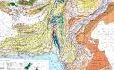
Pakistan is an agricultural nation, renowned for its fertile lands that are capable of producing high-quality crops. These lands also contain mineral deposits scattered throughout the country. From Khewra to Neelum Valley, Kohistan to Tharparkar, and Astore to Saindak, Pakistan is naturally rich in mineral deposits, where each region hosts its own distinct mineral. While other regions are known for their mineral reserves, - the provinces of Balochistan and Gilgit-Baltistan remain central to mineral extraction Balochistan hosts world-class reserves distributed across several of its cities. Saindak is known for copper, gold and silver reserves while Chagai Hills is home to Chromite and iron ore with the largest underdeveloped copper and gold reserves. Gwadar, Lasbella and Khuzdar contain vast reserves of barites, chromite and marble along with other untapped sources.Meanwhile, Skardu, Gilgit Valley, and Hunza in Gilgit Baltistan are rich in gemstones. Shigar and Nagar are well known for their deposits of rare earth minerals, copper, and antimony, while Diamer and Astore host precious stones and a few metals.Recently, this wealth has become the cornerstone of Pakistan’s mineral diplomacy, where resources are considered as bargaining chips and tools of diplomacy on the international stage. Over the last few decades, Pakistan has highlighted its mineral and resource potential, especially to attract foreign investment. The Reko Diq agreement, MoUs with the United States, and Chinese interests in investment point toward Pakistan’s increasing reliance on foreign firms for economic and political purposes. This move not only emphasizes the region’s mineral abundance but also reflects its importance to the country’s economy and foreign policy, as evident in the deals signed on September 8, 2025, when Pakistan entered into MoUs with two companies. The first memorandum was signed with United States Strategic Metals (USSM), an American metals company specializing in extraction and mining. This MoU, worth $500 million, aims to establish a collaborative framework across a range of critical minerals. The second memorandum was signed between National Logistics Corporation (NLC) and Mota Engil Group, a global leader in civil construction, infrastructure, and logistics. As part of the diplomacy, Pakistan’s Prime Minister Shehbaz Sharif and Chief of Army Staff (COAS) presented samples of rare earth elements. While Islamabad cites the US interest in the mineral resources of Pakistan as an economic and diplomatic victory, this step undermines the national interest of the country, especiallyin Balochistan and Gilgit Baltistan, where local dynamics remain delicate. Given historical patterns, this mineral diplomacy aligns with the US strategy of securing minerals and energy to expand its influence, rather than a mere collaboration. Pakistan’s mineral diplomacy risks placing the country in a resource trap by offering natural wealth for temporary strategic and economic favors. Such resource exploitation would not only weaken the economy but also the country's strategic position. The criticism surrounding the Reko Diq agreement and Gilgit-Baltistan’s concerns about mineral exploitation places Pakistan in a difficult position, where international cooperation risks creating domestic imbalance. Reko Diq Agreement: Reko Diq was discovered by the Tethyan Copper Company (TCC), a joint venture between Canada’s Barrick Gold and Chile’s Antofagasta, in the 1990s. The plan includes mining the vast untapped reserves of copper and gold in the Chagai region. As per the original agreement, TTC held 75% of the project, while the government received the remaining 25%. However, in 2011, the Balochistan government refused to grant the mining lease, citing unfavorable terms. The agreement was renewed in 2022 after Pakistan was fined $6 billion by the World Bank. According to the new deal, TTC would receive 50% while the remainder would be equally divided between the federal and the Balochistan government. Although this project promises economic development and employment opportunities in the province by 2028, the structural imbalance remains. Since Pakistan lacks the capacity to process raw ore, much of the profit goes abroad. Reko Diq is often described more as a form of resource colonialism than a development project, as Pakistan’s natural wealth is extracted by foreign powers under the banner of investment. Pakistan’s willingness to sell 15% of its stocks to Saudi Arabian investors further reduces its share to 35%. Such policies weaken the economic control of the government over its own resources. Given the local hostility to Chinese investments in Balochistan, Reko Diq might face similar political and security challenges as this project proceeds. Baltistan: Protests and Mineral Exploitation In April 2025, a wave of protests erupted in Gilgit-Baltistan, starting from the Shigar district. It was a condemnation of the Mines and Minerals bill of 2025 Bill 2025, along with the Minerals concession rules 2024. The federal government was accused of seizing resources without local consent. The president of the Bar Association of Shigar also dismissed the bill, calling it a form of resource exploitation by foreign powers. By comparing it to Balochistan’s Reko Diq and other foreign development projects, the people of Baltistan accused the state of repeating the same extractive patterns where elites and foreign companies benefit from profits while the local population remains impoverished. By taking into account the grievances of Balochistan and Gilgit Baltistan regarding foreign investment, it is evident that Pakistan’s mineral diplomacy tilts more towards mineral exploitation. While Pakistan strives to attract foreign investment for economic purposes, foreign firms keep getting the larger share, while the rest of the profit gradually reaches local communities. This not only creates a development gap between the federal government and targeted provinces, but also results in resentment against foreign powers. To address this gap, Pakistan needs to build domestic capacity in terms of technology and capital so ores can be processed without much foreign involvement. Although mineral diplomacy aims to enhance Pakistan’s economic and strategic capacity, reliance on foreign powers exposes vulnerability, while putting national security and harmony in jeopardy. Eman Arshad is currently pursuing a Bachelor's in International Relations at National Defense University, Islamabad, and has been published in local and national newspapers, as well as e-newsletters.
|
|



| Contact Us | About Us | Donate | Terms & Conditions |


|
All Rights Reserved. Copyright 2002 - 2026