| Tue. March 03, 2026 | |

|
|
|
 By Muhammad Adel Zaky Introduction Political Economy is no longer taught. It has been buried alive in cold lecture halls that produce nothing but submission. It has ceased to be a science of social conflict and has become a technique for erasing the possibility of understanding the present. It is no longer a tool for grasping the movement of history, but rather for denying its existence. Under the hegemony of Neoclassical Economics, which idolizes equilibrium and strips the human being of their society, class, and history, the intellect is reduced to a mere machine for calculating utility. In the Arab world, an education system fossilized within a stifling bureaucracy produces nothing but colonized minds: it indoctrinates without provoking thought, and it reiterates the rituals of obedience within the temples of power. The university, designed to reproduce dominance, does not cultivate any form of freedom; rather, it formalizes failure and institutionalizes alienation. This article is neither a complaint nor a set of recommendations: it is a declaration of rupture with the illusion of neutrality. A reminder that liberation is impossible without a radical rebellion against indoctrination. It is an attempt to reclaim Political Economy as a social science, and to reclaim education itself by reasserting its fundamental mission: liberation, creation, and innovation. Neoclassicism: The End of Political Economy and the Beginning of the Illusion of Neutral Science While Political Economy, as crystallized in the nineteenth century, was an expression of the evolution of European thought and its ability to transform the capitalist mode of production into a "science," what is referred to today as "(Economic Science)," which is the "Neoclassical Economics" [with which students are executed in universities], is not a continuation—even a veiled one—of this trajectory. Instead, it represents a cognitive break, starting with a language purged of any historical debate, where capitalist social relations are presented as natural, eternal, and neutral facts. Neoclassical theory was born amidst the theoretical crisis that struck classical Political Economy after Marx, not as an enhancement of it, but as an obliteration of its critical essence. Instead of analyzing the class relations and social structures that generate and reproduce wealth, Neoclassicism retreats into an abstract mathematical space, where individuals possess absolute rationality, and the market balances as if governed by a law of nature. The most distinctive feature of Neoclassicism is its claim to neutrality: neutrality of the market, neutrality of the state, and neutrality of science. But it ignores, or deliberately overlooks, that the assumption of "neutrality" only means the reproduction of the dominant ideology in the form of equations, symbols, and mathematical functions. The rationality assumed by Neoclassicism is nothing but a reflection of a bourgeois mentality that idolizes exchange and measures everything by the metric of individual utility. Neoclassical analysis proceeds from a central hypothesis: that the human being, regardless of any social and historical specificity, is a creature seeking to maximize their utility within imposed constraints. Thus, Economics is transformed into a (science!) of choice, and the fundamental questions about who owns the means of production, who produces, and who is exploited disappear in favor of technical questions about the optimal allocation of resources! This escape from history merely expresses the theory's submission to a deep-seated desire to exclude social conflict, deny contradiction, and prettify a reality dominated by Capitalism. The concept of equilibrium, which the theory celebrates, is another form of this denial. The market, in this model, knows no chaos, no monopoly, and no structural unemployment. Equilibrium here is merely an idealized image of a world that exists only in the imagination of theorists. Reality, however, is something else entirely: a reality of inequality, a reality of capital that ceaselessly accumulates wealth at the expense of labor. Marshall and Walras introduced a new language that attempted to grant economic science the status of a "natural science." According to their vision, economics was no longer concerned with determining the nature of value or the origin of profit; instead, it became preoccupied with analyzing individual behavior. With the birth of this model, the complete shift from Political Economy to what they call "Economic Science"—or rather, to a science that says nothing about politics, power, or classes—began. Neoclassicism [which is indoctrinated in universities as the only and historically correct science!] is, in its essence, an attempt to produce an economics without people, without conflict, without history. It is the other face of a technocratic rationality that conceals the interests of capital behind the masks of equations and diagrams. If Marx called for turning reality upside down to reveal the contradictions hidden in its depths, Neoclassicism practices the opposite: it covers up contradictions, reproduces reality, and presents it as the end of history. Therefore, the critique of Neoclassicism cannot be a technical or partial critique; it must be a radical, civilizational critique that restores credibility to Political Economy as a social science—a science of conflict, not a science of false accord and compromise. (2) The Halt in Knowledge Production in the Arab World In this context, to understand the nature and content of the "science" currently being taught to students in schools and universities, especially in the Arab world, one must contemplate the transformation that has occurred: a shift from a science that reveals and explains to an art that conceals and misleads. A transformation from a social science (Political Economy) to a laboratory technique (dubbed "Economic Science!"). This "art" has been marketed with extreme aggression in the underdeveloped parts of the contemporary global capitalist system—a categorization to which we belong par excellence! Let us, then, examine the impact of this shift from Political Economy to "the art of management" in the formulation of one of the most important theories: the theory of Underdevelopment, or more accurately, the reproduction of underdevelopment. What is taught in our universities today is not science, but a technique of subservience. Underdevelopment has been packaged into statistics of poverty and disease, and we are shamelessly proposed to escape it by following the recipes of those who created our tragedy. The question about the essence of underdevelopment is forbidden, and any questioning of the dependency relations in the global capitalist system is prohibited. We indoctrinate our children that the market is freedom, the state is a burden, the farmer is an obstacle, the worker is a heavy load, and profit is a sacred god. Then, we release them into power, not to liberate us, but to reproduce an underdevelopment they never truly understood. In this way, memory is assassinated, consciousness is confiscated, history is replaced by the equation, and thought by accounting. Education is thus transformed into a factory for producing servants of the system, not rebels against it. Let us now examine how the phenomenon of underdevelopment is presented: Among the familiar phrases frequently circulated in seminars, conferences, and on the celebratory platforms of institutions concerned with the problems of Arab unity—and, astonishingly, the same phrases are circulated in some intellectual and cultural events held by the ruling political regimes and official institutions in Arab nations—are those that suggest: Every Arab believer, or even non-believer, in nationalism, shared destiny, and common goal, has the right to be astonished, even to express sad and painful sarcasm, when they look at the map of our contemporary world. Whatever map they view—political, geographical, natural... or even blank—they will immediately realize that something bizarre and reprehensible is happening on the ground: that vast, enormous area on the map, which occupies about 10% of the planet's landmass and is called the Arab World/Homeland, lacks nothing in terms of human resources, natural capabilities, and material potential to launch itself towards progress... towards a better life... towards creating a dignified life for future generations. Despite this, our Arab homeland remains (underdeveloped) and (dependent), even though colonialism—the excuse of those who made excuses—vanished decades ago. The Arab homeland remains shackled by the bonds of underdevelopment! Why? To what extent? How can we escape this captivity? Is it possible to achieve this? These questions become even more pressing after the fall of several Arab political regimes in the last ten years. I believe that the answer to these questions, and others related to our very social existence as Arabs, even as humans, is connected to the extent of our awareness of the following five observations within the framework of analyzing the phenomenon of Arab economic and social underdevelopment: Firstly: The majority of contributions—known as "cumulative knowledge"—in the field of analyzing the phenomenon of Arab economic underdevelopment, in particular, have only been able to perceive underdevelopment through data of sickness, figures of poverty, conditions of the hungry, and statistics of income, output, distribution, inflation... and so on. Consequently, the solution proposed by these officially adopted contributions for escaping the crisis of underdevelopment is to focus on calling, and sometimes screaming, for the adoption of the "free/capitalist policies" followed by countries that do not suffer from poverty, disease, and hunger, so that the underdeveloped countries can escape poverty, disease, and hunger! Secondly: The majority of contributions end where they should begin. We usually see hundreds of writings in this regard proposing linear/performance-based economic policies to exit the crisis of underdevelopment, without attempting to raise the dialectical manner in which underdevelopment was historically formed on the social level in the underdeveloped parts of the contemporary global capitalist system in general, and our Arab world, which is one of those parts, in particular. The best that has been achieved is a mention of colonialism as a dead history, followed by an acrobatic leap—after ignoring or ignorantly overlooking history—to propose free-market policies! Thirdly: The problem of Arab economic underdevelopment is usually addressed in isolation from the global problem of underdevelopment, meaning without seeing the Arab economy as one of the underdeveloped parts of the contemporary global capitalist system. Perhaps this is a logical arrangement for addressing the issue from a unilateral perspective that assumes homogeneity among Arab economies and only sees the "integrative" approach and the "idealistic" call for Arab economic integration. This is done without any consideration for the role of the constrained and dependent political will, as if our Arab countries live outside the planet! Even though the (achievement) of the Arab economic integration project is tied to exiting Capitalism as a global system, by replacing capitalist social relations with social/human-oriented ones. Relations that are based on disengagement from global imperialism through a civilizational project for a secure future. This cannot be achieved except through a national political will capable of effectively disengaging from the plundering forces of international capital. Fourthly: The most important question, and the one most often left unanswered, is: Why do Arab world countries remain underdeveloped after the departure of colonialism, which distorted the economic structure and caused the underdevelopment? This question is habitually ignored by the official theory, which makes a "comedic" transition to: How do we exit underdevelopment through integration? Here, we see a flood of (school-based/official) proposals that do not know what they are proposing to exit the crisis because they mostly do not know what they are looking for. This is also a logical outcome when these proposals do not know the very essence of underdevelopment. Yet, talking about Arab economic integration is meaningless and useless if it is not coupled with a parallel investigation into the phenomenon of economic and social underdevelopment in the Arab world countries. Moreover, and this is intellectually and realistically necessary, the investigation should be conducted from the perspective of their position as underdeveloped (and non-homogeneous) parts of the contemporary global capitalist system, studying the essence of underdevelopment, its determinants, and how to historically overcome it. Talking about Arab economic integration will not become convincing without talking about a structural method to overcome underdevelopment itself, starting with a reconsideration of the cumulative knowledge in the field of underdevelopment theory itself. Fifthly: Because the official theory (Neoclassicism in its entirety) is the one adopted for indoctrination in schools, institutes, and universities in our Arab world, the result is the daily execution of hundreds of thousands of students who are taught morning and evening the statistics of poverty, the number of the sick and the hungry, and are told that this is underdevelopment itself. If you want to lead your countries out of this state, look at what the political economic decision-makers in the capitalist West are doing, and do what they are not doing! Because they are truly ashamed! Be more ambitious than them. Open the markets. Liberalize trade. Float the currency. Do not support the farmer, and leave them prey to speculative capital. Lay off workers. Cut public spending. Remove your hands from pricing. Support the major financiers. Get rid of the public sector. Welcome foreign capital, and do what the IMF and the World Bank dictate to you. Sanctify the Harrod/Domar model. Read only the Neoclassicists. Follow Jevons, Menger, Walras, Phillips, Samuelson, Gwartney, Friedman, Krugman, Solow, and other marginalists, Keynesians, and monetarists. Inevitably, after these victims, who are being intellectually executed daily in the educational institutions of the Arab world, are told that "Economics" is only that accumulated mass of numbers, equations, and symbols in the works of these figures alone, and that others are either buried history or infidels/heretics... the final outcome, when these students/victims hold political decision-making power in their underdeveloped countries, is their most effective contribution to deepening underdevelopment, and perhaps accelerating the pace of its reproduction! In light of these observations, we find that the economic science taught to these students/victims day after day in the Arab world is based on one absurd axiom: "Everything depends on everything!" Worse still, some professors—yes, economics professors in universities—find no embarrassment in teaching their students that "Economics is the same as Political Economy," and that the difference between them is only a difference in terminology or a historical evolution! This is pure nonsense. The difference between the two is like the difference between illusion and reality, between ideological justification and genuine scientific inquiry. To understand how this happened, we must understand the nature of the university institution in our Arab world as one of the underdeveloped parts of a global capitalist system—the very institution that produced these professors. (3) Pulpits of Silence: Schools and Universities Between Obedience and Knowledge In our afflicted Arab countries, where the paradox of organizational chaos meets the rigidity of dry bureaucracy, education has become part of a complex system for the reproduction of organized ignorance and the entrenchment of social and political hegemony. Education, which is supposed to be the key to the free mind and the symbol of civilizational transformation, has today become a bureaucratic laboratory for producing beings emptied of thought, ready for automatic prostration before any authority, and trained not to question but for organized silence. This official education aims only to entrench the class-based social reality and works tirelessly to solidify it through the imposition of a culture of obedience that fundamentally contradicts the spirit of critical thinking. How can an institution based on indoctrination and memorization produce freedom of thought? It is a false industry that recycles dead knowledge and imposes strict limits on the space of the mind, while presenting itself as a safeguard for civilization and progress! Schools and universities (that teach Economic Science!), which ought to be pulpits for intellectual liberation, have become stages for a repeated, dramatized performance of indoctrination mechanisms that reproduce class disparities and symbolic hegemony. The criterion, consequently, is neither understanding nor creativity, but the ability to repeat the sacred texts of power like an anthem recited in the presence of tyranny; it is a system that recycles the colonized mind using methods not very different from those invented by the colonizer to manufacture his loyal servants! In another tragic scene, the teacher turns into a victim of the bureaucratic system itself; deprived of the most basic working conditions, they are asked to graduate generations of recipients who hold nothing more than a decorated certificate without substance. How ironic it is to ask teachers who themselves suffer from marginalization, lack of resources, and even lack of knowledge itself, to produce conscious generations, while they themselves are prisoners of a culture of oppression and monotony. This is the education that reproduces unemployment and underdevelopment because it builds nothing but illusion and cultivates a culture of hesitation and contentment with the minimum. Education in our afflicted Arab world is based on a central hypothesis: that the next generations are merely tools for political stability, not citizens. This hypothesis turns into a painful reality when we see curricula entrenching the authoritarian mentality and preparing minds for surrender instead of revolution against the bitter reality. We must, therefore, fundamentally rethink the function and tools of education, for no renaissance can be built on the ruins of regulated ignorance, and no liberation is born from the womb of intellectual guardianship. The education that does not free the mind from the dominance of authority, and does not ignite the spark of creative doubt in consciousness, is nothing but a tool for generalizing incompetence and recycling defeat. It is an invisible chain, only felt when the mind becomes incapable of questioning. A chain that can only be broken by redefining education as an act of rebellion against mediocrity, not as a means of integration into the pattern of ruin. Shall we, then, continue down this dead-end path, producing more ignorance and compliance under glossy names? Or shall we choose to shatter the old chains and establish an education that opens horizons of freedom, creation, and innovation to the human being? This is the battle of the mind and civilization that we cannot evade, for it is the axis of our salvation or the continuation of our tragedies. But this battle requires a critical awareness of the nature of university education in our Arab world—the education received by economics students! (4) From the Church to the University: The Continuation of Hegemonic Roles in New Forms University education, in its modern manifestation, was not merely a transition from "knowledge for knowledge's sake" to "knowledge for the market's sake"; it has always been one of the tools of power in its ideological form. It produces illusion just as it produces the certificate, and it subjugates the mind just as it subjugates the body. Since the moment the university emerged as a modern entity within the rising European city, its highest purpose has not been to liberate the mind, but to reproduce the prevailing social structure, stabilize the social division of labor, and entrench the contemporary myths of scientific legitimacy! The modern university is not a neutral institution; rather, it is a central expression of the spirit of Capitalist Civilization—the one that sees the human being only as human capital, knowledge only as an input for production, and the mind only as a tool for calculation. If the Church ruled with theology in the Middle Ages, the University today rules with academic classifications, quality standards, publishing metrics, and grants what resembles the stamp of modern legitimacy: Accreditation! It is no coincidence that universities in the underdeveloped parts of the global capitalist system, such as in our Arab world, have turned into distorted copies of their Western centers, where programs are imported like commodities, and ignorance is reproduced in the guise of modernity. Just as the dependent economy produces only dependency, the dependent university in our Arab world produces nothing but alienation! What is needed today is not administrative reform of the university in our Arab world; what is needed is a radical critique of its function, a deconstruction of its structure, and a revelation of its cultural and civilizational origins. We must be liberated from the illusion that the university is concerned with freeing minds, and recognize that, with its structures, methods, and curricula, it is part of the system of control. It produces the disciplined specialist, not the free thinker; it trains for obedience and marginalizes creation, perhaps even disparaging and punishing it. When managed this way, the university transforms from a house of knowledge to a house of obedience! Conclusion The pedagogical crisis of economic science is thus not a fleeting symptom; rather, it is a manifestation of a deeper crisis, where knowledge and power intertwine to impose hegemony. What is taught in the name of "science" is nothing but the reproduction of the dominance of capital and the entrenchment of the market's legitimacy, starting from the belief that it is an inevitable destiny. In universities that resemble silent factories, the mind is molded for obedience, and certificates are classified as credentials in an auction of compliance. The liberation of Political Economy from the bondage of Neoclassicism, and the liberation of education from the cloak of guardianship, is not an intellectual luxury, but a civilizational necessity. We must either restore the mind's right to question and conflict, or continue to recycle incompetence with tools that appear scientific but are, in essence, tools of suppression and crushing. It is not surprising, amidst this cognitive decline, that the colleges that teach economics in our Arab world transform into training camps for stereotypical thinking, where history is absent, the human being is reduced to a production function, blind obedience is rewarded, doubt is excluded, and rebellion against knowledge is punished. Reality is reshaped to suit the interests of the dominant authority. Confronting this distortion requires a radical thought that redefines science not as a neutral technique, but as a tool for liberation and a method of accountability.
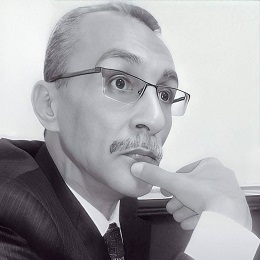
Muhammad Adel Zaky is an Egyptian researcher specializing in the history of economic thought. He is the author of Critique of Political Economy, a book that has gone through six editions. His research explores the evolution of economic ideas in relation to social and historical change.
|
|



| Contact Us | About Us | Donate | Terms & Conditions |


|
All Rights Reserved. Copyright 2002 - 2026