| Wed. February 18, 2026 | |

|
|
|
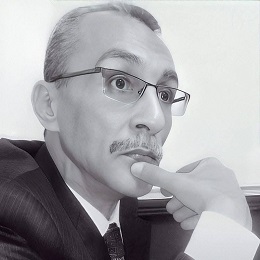 By Muhammad Adel Zaky The moment my article “A Critique of the Measure of Value” was published, the “guardians of the dogma,” as usual, pounced with all manner of nonsense. As expected, the article provoked discontent among many of my “comrades!” and displeasure among Marx's devotees in downtown cafés. This article, therefore, is a deliberate intellectual continuation, aiming frankly to intensify that discontent and deepen that displeasure __ precisely among those who have no desire for true awareness and resent anyone who dares to unsettle their intellectual idols, even if they are made of papier-mâché. A dogmatist becomes agitated when his idol is snatched away. And that is exactly what happened: the article struck a nerve with those barricaded behind slogans they've memorized by rote, without ever questioning their foundations or understanding their context. So, this article continues, however briefly, the process of unsettling. Its goal is not to revise or justify. The central idea here is both simple and shocking: most of those in our afflicted Arab world who define themselves as Marxists today do not truly know Marx. They know a faded, tattered, and hollow image, one they've created themselves, repeated to the point of banality. They know him through ready __ made soundbites like: “Religion is the opium of the people,” “The ruling ideas are the ideas of the ruling class,” “Class struggle is the engine of history,” “As capital accumulates, the misery of the workers deepens," "Consciousness does not shape life; rather, life shapes consciousness”... and so on, with all the other clichés tossed around in study circles and seminars, repeated like incantations in religious rituals. The paradox is that these phrases, in their generalized form, aren't much different from the reflections of a simple man in a café, who has some life experience and a rebellious streak—he doesn't need Marx to discover these things or philosophize about them. And we must never forget that Marx would have remained unknown in the Arab world had he not been adopted by state institutions in the 1960s; if his books and correspondence hadn't been translated by Progress Publishers in Moscow during a period of cultural influence, no one would know him. His recognition would be little different from public awareness of François Quesnay or Richard Cantillon! No one would have known about his amorous letters to his wife, or his infidelity to her while she was away borrowing money for him! The real Marx is not this superficial veneer of words. Marx is the thinker who devoted his project to understanding the world through a critique of political economy. He was not a revolutionary preacher, but a sociologist who immersed himself in the structure of value, in labor-time, in the nature of work, in the conditions of exchange, in the laws of capital accumulation. Marx's project was not inherently political, but scientific; he sought to establish a materialist understanding of history, starting from the economic base, not from the intentions of individuals or the passions of the masses. Any reduction of him to fiery phrases or a partisan role is a betrayal of his work, even if done in the name of loyalty. And here lies a bitter paradox. Most of those who wave Marx's banner today lack the most basic knowledge of political economy. They haven't read Smith, Ricardo, Cantillon, or Quesnay. They speak of “revolution” and “the proletariat” like teenagers talk about first love__with pure passion, but without knowledge, without history, without analysis. Furthermore, Marx was not isolated from history, nor did he descend by divine revelation. He was a product of modern European civilization. He emerged from the heart of classical political economy, was influenced by its scientific spirit, and then rebelled against it. He was not an enemy of Ricardo, but a critical extension of him. He stood on his shoulders, saw what Ricardo had not seen, and discovered within his laws what was presented as “natural” but was, in truth, “historical.” Denying this continuity, which Marx himself repeatedly acknowledged, betrays nothing but a lamentable ignorance or a pathological dogmatism. Yet, many “Marxists” in the Arab world insist on rejecting this truth. They insist that Marx is an absolute moment, severed from everything that came before him, and that nothing of value can come after him! They treat him as a sacred, heavenly decree, not as a human thinker within a historical context. They want the embalmed Marx, the idol, not the living Marx, the thinker. They do not want a Marx who could err, who sometimes uttered trivial ideas. It is no wonder, then, that Marx has been transformed into Marxism, and this Marxism, in their hands, has turned into a dead, even repellent, language. Marx is a great thinker, yes. But he is not above criticism, nor is he immune to being superseded. His greatness lies precisely in the fact that he himself practiced critique and supersession; he deified no one and stopped at no boundary. He is one of the great thinkers of political economy, neither the first nor the last. Anyone who wishes to read him properly must thoroughly understand those who came before him, not confine themselves inside dead phrases they mindlessly parrot in every meeting and article. Here, I pose a simple but unsettling question: Can we rediscover Marx without Marxism? Can we reclaim him as a thinker concerned with the structure of value, production, and distribution, not as a revolutionary leader applauded by followers? Can we read him scientifically, outside the authority of hollow slogans? The most dangerous thing that can happen to a thinker like Marx is for him to become a slogan, for his project to be reduced to memorized phrases repeated by tongues untouched by minds. For whoever dares not criticize Marx, does not understand him... and whoever mindlessly repeats his phrases is merely reproducing ignorance, and perhaps chaos, in the name of revolution. (2) Let us now return to “A Critique of the Measure of Value,” which unsettled the comrades' sleep. Value, in the history of political economy__which is, in its essence, the science of the law of value__has not been an object of inquiry so much as a means of domination. Ever since this discipline carved its path between The Wealth of Nations and Principles of Political Economy and Capital, it posed the question of value as an entry point for organizing relations of production according to a measure that does not reflect reality, but rather reshapes it to serve those who possess the tools of its reshaping. It was never posed as a purely epistemological question. Thus, theory was transformed into power, and science into a tool for ensuring compliance. “Labor-time” was adopted from the outset as the measure of value because it serves the requirements of the capitalist market, which sees in labor nothing but a quantity of time that can be counted, divided, and compared__not a human action that is concrete, accumulated, conditional, and dialectical. Marx's “socially necessary labor-time” was merely a refinement of Ricardo's concept, which itself was merely a distillation of the method that stripped labor of its bodily form and social conditions, turning it into a measurable unit. A measure that appears neutral in its mathematical formulation, but is, at its core, an ideological representation that conceals power within the concept. But what is actually being measured when we say that “the value of a commodity equals the labor-time necessary for its production”? Are we measuring exertion, or are we measuring efficiency? Here, the deception of the standard is exposed: time, as a unit of measurement, does not express toil, skill, or the labor's place within the social edifice of production. Therefore, when one hour of complex mental labor is equated with one hour of simple manual labor, we are engaged in concealing the difference between types of work, transforming distinction into a fictitious equivalence. We are not engaged in measuring value. Political economy encountered this problem early on. Smith acknowledged it in The Wealth of Nations, stating that finding an accurate measure of the toil or skill involved is not easy, and that exchange is based not on a scientific standard but on market bargaining. Ricardo, likewise, never breaking free from Smith's shadow, conceded that the estimation of the type of labor is settled by the market according to its intensity and skill. Marx alone, despite representing a leap in critique, completely ignored this crisis, insisting, with remarkable strangeness, that the reduction of different kinds of labor to simple labor is accomplished by a social process that operates behind the backs of the producers! Yet this collective submission to the market as the arbiter between different labors did not lead to the discovery of an objective law of exchange; it deepened the confusion: the market might equate an hour of a blacksmith's labor with an hour of a carpenter's labor in one country, and make it ten times different in another, without explaining why. For nearly three centuries, political economy has been content to use an unstable measure for value, and when unable to defend it, resorted to the market. That is, to fluctuations, to the transient, not to an objective law. Herein lies the fundamental flaw: a measure, to be a measure, must be constant. One cannot measure value with a unit of measurement that is itself variable. The “quantity of labor” is not a constant measure because labors differ in terms of toil and skill, and thus, their values differ even if their duration is equal. Add to all this that the (hour) as a unit measures time, and value is human effort crystallized in a product during a certain time-it is not the time itself! What is required today is not merely to move beyond this measure, but to deconstruct its conditions, to break free from the illusion of capitalist normativity that claims “objectivity” while concealing a symbolic violence within. What is required is a correct measure that arises from the essence of value: expended social human energy. Not the time through which it is expended, for the energy expended__living, stored, and surplus__is what must be measured, not as a metaphor but as a substance quantifiable by physics. Therefore, the alternative measure must be the socially necessary caloric price--the actual quantity of energy society requires to produce a specific commodity, divided by time not as a unit of measure, but as a calculative medium that allows us to measure the intensity of energy per unit of it. Thus, we escape the constraint of temporal measurement and liberate ourselves from the logic of false equivalence. An hour of a barber's labor no longer equals an hour of a surgeon's labor, nor does an hour of a guard's labor equal an hour of a mason's labor, because what is measured is not time, but the energy expended within a specific social context. This is the essence of the transformation: from time to energy, from abstraction to intensity, from the market to the human being. The critique of the measure of value is not a technical adjustment within the theory, but a radical deconstruction of the system that made time, not labor, the core of the relationship between humans and commodities. It aims not to improve the theory, but to surpass it__not by canceling Smith, Ricardo, or Marx, but by reading them from perspectives they did not write from, from where the measure itself silenced them. The issue, at its core, is not merely a technical debate about how to measure value. It is an existential question concerning how we view the human being themselves: Is he merely a productive unit whose output is measured by time? Or is he a living, multi-dimensional being whose value cannot be reduced to the number of hours spent in front of a machine, in a workshop, or in a factory? When we measure labor by time, we not only err in calculating value, but we also participate, consciously or not, in cementing a worldview that sees humans as mere machines, subjecting human effort to the logic of cold calculation. But energy, as a tangible trace of a pulsating body, the real suffering of a laboring body, carries within it a promise to restore the status of the working human as the center of the production process, not its accessory. It measures not only what is visible, but what is felt, lived, and implicated in every moment of the struggle for survival and dignity. Hence, transcending the temporal measure means not only correcting an economic theory that time has passed by, but also, in its deepest sense, liberating value from the grip of the market, and liberating humans from being a “number” in the ledger of capital. For value, as we see it, is not a sterile equation, but a living relationship between humans and the world; a relationship measured by dripping sweat, an accelerating pulse, and an internal combustion that mathematical formulas cannot perceive, however neutral they may appear. Perhaps it is time to listen to the silence of the worker, whether the miner or the university professor, to read value in the exhaustion of the body, not in the ticking of the clock. For there, in the depths of expended energy, resides the truth that theory has long ignored. And correcting the measure of value, by moving beyond the Marx whom the measure failed, is what can restore the standing of political economy, revive and renew it, as the science of the law of value, without resorting to the market__which stripped political economy of its subjectivity, specificity, and pure scientific nature. Muhammad Adel Zaky is an Egyptian researcher specializing in the history of economic thought. He is the author of Critique of Political Economy, a book that has gone through six editions. His research explores the evolution of economic ideas in relation to social and historical change.
|
|



| Contact Us | About Us | Donate | Terms & Conditions |


|
All Rights Reserved. Copyright 2002 - 2026