| Wed. March 04, 2026 | |

|
|
|
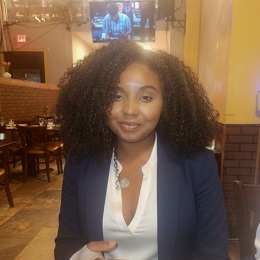 I. Introduction On approximately August 15, 2021, the last American military aircraft departed Kabul, leaving the Islamic Emirate of Afghanistan or commonly known as the Taliban, to presume control of the country after two decades of absence. In the four years since the Taliban's take over, Afghanistan has witnessed the systematic erasure of women and girls from public life at an unprecedented rate ever seen before. Today, nearly 80% of young Afghan women are excluded from education, employment, or public participation, while only one in four women works or seeks work compared to nearly 90% of men (Felbab-Brown). What was once meticulously described as "restrictions" or "limitations" on women's rights has now evolved into what many consider along with international human rights experts, as "gender apartheid”. A state-sponsored system designed to subjugate half the population based solely on their sex. The term "gender apartheid" was first employed by Afghan women during the Taliban's initial reign from 1996 to 2001, when the regime imposed draconian measures that removed women from schools, workplaces, and public spaces. In 1999, UN Special Rapporteur Abdelfattah Amor documented that the Taliban had introduced "a system of apartheid in respect of women" (Radhakrishnan and Worthington). Now, this issue has resurfaced with renewed urgency as the international community grapples with the Taliban's current systematic campaign to eliminate women's presence from Afghan society only to isolate them, for some may argue merely, for the role of a sex slave..The restrictions extend far beyond education and employment; they encompass healthcare access, freedom of movement, economic participation, and even the ability to exist in public spaces without complete bodily concealment and male guardianship. This systematic persecution creates not only a gender issue but also a humanitarian crisis of staggering proportions. As of 2024, 23.7 million Afghans, more than half the country's population, required urgent humanitarian assistance, with 12.4 million facing acute food insecurity (Afghanistan Humanitarian Needs and Response Plan 2024). Women and girls, already marginalized by Taliban laws, bear the disproportionate numbers of this crisis. Additionally, the Taliban's bans on female aid workers have crippled humanitarian operations, creating an unfeasible situation where the people most in need of assistance are the same people the Taliban has made unreachable. The following research analysis illustrates how the situation in Afghanistan represents more than just a script of discriminatory policies but a coordinated system that impedes human dignity and the welfare of women and girls by jeopardizing their safety, sexual dignity, fulfillment of life, and their human rights. II. The Problem: Taliban Restrictions and Their Impact The Taliban's systematic oppression of Afghan women operates through a cycle of interconnectedness of restrictions that hinder every aspect of women's lives. These measures are deliberately designed to render women invisible, voiceless, and economically/physically dependent. The first measure extends to the limitations of education. The Taliban's assault on women's education represents perhaps the most visible manifestation of their ideology. Since September 2021, girls have been prohibited from attending secondary school beyond sixth grade, effectively ending formal education for millions of Afghan girls at approximately age twelve. In December 2022, the regime extended this ban to universities, abruptly terminating the academic careers of an estimated 450,000 female students enrolled in 167 public and private universities across Afghanistan (Mashal and Rubin). Thousands of these students were in their final years of study, mere months from graduation, when they were ordered to leave their campuses and never return. In 2024, the Taliban systematically eliminated even the narrow educational pathways that had remained accessible to women. In December of that year, the regime issued an order banning women from attending nursing and midwifery training institutes, institutions that had represented the last remaining avenue for women to pursue any form of higher education (Barr). Estimates suggest that around 35,000 girls were enrolled in over 150 private and 10 public medical institutions offering diplomas in fields such as nursing, midwifery, dentistry, and laboratory sciences before the ban (Are We Not Human?). One 22-year-old woman who had been studying economics before the 2022 university ban told researchers that when nursing classes opened, she enrolled immediately, "desperate to continue studying" (Fetrat). Many students learned of the nursing ban that same month just days before completing their final semester. “One nursing student described receiving condolence calls from friends before rushing to her institute, only to be told by her teacher to "go home.” The institute is closed until further notice"’(Shattered Hopes'). Another student who had been in her final year of journalism when universities closed in 2022 had found hope in midwifery training: "Despite all my sadness, I sought refuge in this institute. Now they've closed this too" (Shattered Hopes). The psychological toll of having one's educational aspirations shattered can make you feel like a prisoner. The educational restrictions extended beyond formal prohibitions. In late August 2025, the Taliban issued orders removing books written by women from Afghan university libraries and banning the teaching of 18 academic subjects. Among the prohibited subjects are human rights, sexual harassment, Gender and Development, Women's Sociology, and The Role of Women in Communication, subjects that had offered some of the last academic space to talk about women's lives (Linde). The systematic purging of women's voices and perspectives from academic discourse represents an attempt to erase not merely women's present participation but their intellectual contributions to Afghan society. The long-term consequences for Afghanistan's human capital are catastrophic. Recent estimates suggest that Afghanistan has 0.33 doctors per 1,000 people versus 20 per 1,000 in high-income countries, while the World Health Organization recommends a rate of 2.5 per 1,000 (Safi and Rahim). The Taliban's restrictions on women's employment have also created what amounts to economic apartheid. Women are banned from working in government positions, most private sector jobs, and non-governmental organizations and UN agencies. The impact on women's economic participation has been devastating. The Taliban's decrees have eliminated nearly all legal means for them to earn income.The economic impact extends beyond individual families to Afghanistan's broader economy. The United Nations estimated that the annual loss from the Taliban's ban on women's employment was $1 billion, or 5% of the country's gross domestic product (Hassan). In a country already grappling with severe poverty and humanitarian crisis, the deliberate exclusion of half the potential workforce represents a self-inflicted economic catastrophe. Women's economic marginalization also strips them of financial independence, increasing their vulnerability to domestic violence and exploitation while reinforcing patriarchal control structures that the Taliban explicitly seeks to maintain. In these other capacities, the extremism of healthcare has been the most exacerbated. Women are prohibited from seeking medical care from male doctors in many provinces and simultaneously banned from training to become healthcare providers. This leaves women, particularly in rural areas, with no access to medical care whatsoever. Afghanistan recorded 521 maternal deaths per 100,000 live births as of 2023, many times the regional average of 120 (Felbab-Brown). These figures were collected before the December 2024 ban on women's medical training took effect; experts anticipate the maternal mortality rate will climb even higher as the existing cohort of female healthcare workers ages out of the profession with no one trained to replace them. The devastating outcomes are endless: women bleeding to death during childbirth because no female healthcare provider is available, preventable illnesses going untreated, and pregnant women unable to receive prenatal care. The Taliban's restrictions on women's healthcare access operate on multiple levels. Women cannot travel to medical facilities without a male guardian (mahram), but many women, particularly widows and those whose male relatives work far from home, lack readily available guardians. Recent earthquakes in Afghanistan have provided horrifying illustrations of these restrictions' deadly consequences. Women trapped under debris have gone without rescue because unrelated men are prohibited from touching them, and insufficient female rescue workers are available. The law's provisions are extraordinarily comprehensive in their reach. Women must completely cover their bodies, including their faces, at all times in public. The law mandates that women wear clothing covering their entire bodies, bans on their voices being heard in public, and further restrictions on their movement without a male guardian (Shamdasani, qtd. in Afghanistan: Condemnation). The law equates women's voices with awrah, an Arabic term referring to intimate body parts that must be covered. The UN human rights office condemned the law for attempting to render women "into faceless, voiceless shadows" (Shamdasani, qtd. In Afghanistan: Condemnation). Women cannot sing, read aloud, or even speak at normal volume in public spaces. The ban extends to all forms of sound production: no laughter, no prayer recitation, no poetry reading. Practically, women cannot ask for directions, call for help in emergencies, or conduct basic interactions necessary for daily life. Women are also prohibited from traveling any significant distance without a male guardian. This restriction compounds the healthcare access crisis: a woman suffering a medical emergency cannot simply travel to a hospital but must first locate an available male relative willing to accompany her. The Taliban's morality police enforce these restrictions through checkpoints, where women traveling alone are detained, their families fined or imprisoned. The restrictions extend to recreational spaces. Women are banned from parks, public baths, gyms, and salons eliminating even informal spaces for women's social interaction. These restrictions constitute gender apartheid based on what the UN Women describe as "an inescapable cycle which relegates women to private spaces and increases their vulnerability." A woman cannot attend school, so she cannot become educated. She cannot work, so she has no economic independence. She cannot travel without a male guardian, so she cannot seek healthcare independently. She cannot speak in public, so she cannot advocate for herself or others. She cannot access parks or social spaces, so she has no outlet for these restrictions. This systematic, coordinated assault on every dimension of women's lives is precisely what distinguishes gender apartheid from mere discrimination. The Taliban's control is a strategic tool of gendered oppression, designed to establish and maintain male supremacy as state policy. III. Historical Background: Origins and Evolution of the Taliban The Taliban emerged in 1994 amid the chaos following the Soviet Union's withdrawal from Afghanistan and the subsequent collapse of the communist government. The name "Taliban," meaning "students" in Pashto, reflects the movement's origins in religious schools. The founders consisted of peasant farmers and men studying Islam in Afghan and Pakistani madrasas, religious institutions that provided free education, housing, and food to Afghan refugees fleeing decades of conflict (Warren). In the refugee camps of Pakistan, orphans were recruited into radical Islamic colleges where they received intensive religious indoctrination emphasizing jihad and a strict interpretation of Islamic law (Maley). Under the leadership of Mullah Mohammad Omar, a former mujahideen fighter disappointed that Sharia law had not been implemented following the Soviet ouster, these students formed a militia pledging to rid Afghanistan of warlords and criminals. 50 students soon grew within months to more than 15,000 members as the movement attracted support from Pakistani madrasas, which saw the Taliban as a movement to install a government favorable to Pakistani interests (Taliban). The movement's ideology combined Deobandi Islamic traditionalism, a revivalist interpretation emphasizing strict adherence to religious texts and rejection of Western influences… (Taliban). By 1996, the Taliban had seized Kabul and established the Islamic Emirate of Afghanistan, gaining control over approximately two-thirds of the country. Their first regime (1996-2001) set the standard that would define Taliban governance: strict religious regulations enforced through violence, systematic ethnic persecution, and the near-total exclusion of women from public life. The September 11, 2001 attacks and the Taliban's refusal to surrender Osama bin Laden prompted a U.S.-led invasion that removed the regime from power by the end of 2001. The following two decades saw Afghanistan's republic make significant progress on women's rights. Girls returned to schools, women entered universities and workplaces, and female participation in public life, while still constrained by traditional norms and ongoing conflict, expanded dramatically. Yet during this period, the Taliban never renounced their foundational ideology. Operating as an insurgent force from safe havens in Pakistan, they maintained their core beliefs about women's place in society, viewing the republic's gender policies as Western impositions incompatible with their vision of Islamic governance. The Taliban then returned to power in August 2021 following the U.S. withdrawal. Taliban spokesmen claimed women would be allowed to work and study "within the framework of Islamic law." These assurances proved false. Within weeks, secondary schools for girls were closed. Within months, women were banned from universities and NGO work. The pattern has continued. The movement that emerged from Pakistani madrasas in 1994 preaching female subjugation is the same movement enabling gender apartheid in 2025. Where the first Taliban regime faced immediate global condemnation and isolation, the current regime has received muted international response, creating space for the entrenchment of restrictions and this can not stand as an argument of encroaching on state sovereignty as intervention has historically been enacted prior. IV. Present-Day Crisis: Case Examples Beyond the visible restrictions on education and employment reveals a darker crisis of sexual violence, deteriorating physical and mental health, and exploitation of vulnerable women and girls. The Taliban's restrictions have created an environment where sexual violence and exploitation operate with complete impunity. UN experts documented increased risks of trafficking for child and forced marriage, sexual exploitation, and forced labor (Afghanistan: Taliban Attempting). The Taliban abolished the 2009 Elimination of Violence Against Women (EVAW) Law, which had criminalized 22 acts of abuse including rape, battery, forced marriage, and preventing women from attending school or work. Women's shelters that once provided refuge for survivors have been forced to close, and specialized courts and prosecution units responsible for enforcing protections against gender-based violence have been discontinued (Afghanistan: Taliban Attempting). Between January 2022 and June 2024, Afghan Witness recorded 840 incidents of gender-based violence against women and girls, including 332 killings (Human Rights in Afghanistan). Yet these documented cases represent only a fraction of actual violence, as reporting mechanisms have collapsed. In August 2024, the UN Special Rapporteur reported cases of women detainees experiencing sexual violence, and investigations revealed that Taliban forces initiated campaigns to arrest women for hijab violations, with many detained women reporting degrading treatment, torture, and rape (Human Rights in Afghanistan). In documented cases, teenage girls accused of moral offenses have been sentenced to prison, only to have Taliban judges arrange forced marriages to older Taliban members as conditions for early release (Rahmani and Rasooli). The absence of adequate legal recourse leaves survivors in perpetual vulnerability.. In 2023, nearly 30% of Afghan girls under 18 were married, including 10% under age 15 (FAQs: What It's Like). The economic desperation also created by Taliban policies drives this increase. Families facing starvation sell daughters to much older men, viewing it as economic necessity. The psychological devastation among Afghan women has reached catastrophic levels. In 2024, 68% of women reported their mental health as "bad" or "very bad," and 8% personally knew at least one woman or girl who had attempted suicide (Lederer). By 2025, this deteriorated further: close to 75% of women described their mental health negatively, with 90% of women and girls rating it as bad or very bad by September 2024 (Ahmed; Four Years On). Salima from Ghor province ended her life with a hunting rifle during a family conflict. Suraya, age 19, hanged herself in Faryab for reasons her family refused to disclose. Tahira, 19, took her life in Bamiyan after being abducted and assaulted by Taliban forces (Ahmed). Yet accessing mental health services is nearly impossible. Female mental health professionals are banned from training, cultural stigma prevents women from discussing psychological issues, and the healthcare system has collapsed. Traditional beliefs and religious misconceptions prevent women from receiving mental health assistance, eliminating their only chance for help (Shayan et al.). In addition, the physical health consequences of Taliban restrictions manifest in rising mortality and untreated illness. Afghanistan recorded 521 maternal deaths per 100,000 live births in 2023, many times the regional average of 120 (Felbab-Brown). UN Women projected that by 2026, leaving 1.1 million girls out of school and 100,000 women out of university would correlate with a 45% increase in early childbearing and up to 50% increase in maternal mortality (Lederer). With the December 2024 ban on women's medical training, these projections will worsen as existing female healthcare providers age out without replacements. Women cannot access healthcare facilities without male guardians, yet many widows and women lack available mahrams. The International Organization for Migration warned of "a near-collapse of the national public health system," with the EU noting that basic health services reach just 10% of women (Human Rights in Afghanistan). Women are dying from preventable causes: bleeding to death during childbirth, suffering untreated illnesses, receiving no prenatal care, because the Taliban's restrictions prevent them from reaching healthcare providers. V. Humanitarian Assistance Barriers, Solutions, and the Future On December 24, 2022, the Taliban issued a decree banning women from working in all national and international non-governmental organizations, allegedly because women were not wearing the Islamic headscarf correctly (UN and Top Aid Officials). In April 2023, this ban extended to United Nations agencies, ordering the UN's approximately 400 Afghan female staff members to stay home (Leddy). The impact was immediate and catastrophic. Major international aid agencies suspended operations nationwide. In regions where the ban was strictly imposed, it impeded the ability of aid workers to register and verify cases of families that need aid, with women employees critical particularly for projects involving households run by women (Leddy). A UN Women survey found that 93% of organizations reported the ban impacted their ability to access women with humanitarian assistance (We Need Women). Nutritional programs, immunizations, and child protection services stopped or were severely reduced. Mobile health teams, often the only source of healthcare in remote areas, could not operate effectively. CARE International, with 900 staff members in Afghanistan (nearly 40% women), had to suspend various projects across the country after the December 2022 ban (Need for Afghan Aid). The ban on female aid workers triggered not only operational suspensions but also a funding crisis. As of November 2024, the UN Humanitarian Needs and Response Plan had received only 31% of needed funds (Felbab-Brown). The UK's funding for Afghanistan fell from a committed £286 million to £246 million in 2022/23, affecting critical programs including polio vaccinations and landmine clearance. Donor fatigue, competing humanitarian emergencies in Ukraine and East Africa, and frustration with Taliban intransigence all contribute to reduced international support (Afghanistan: Ban on Female Aid Workers). More than 100 Afghan civil society groups and NGOs issued a statement in January 2023 criticizing international NGOs for suspending work, arguing that "allowing a bigger humanitarian catastrophe to develop will create further polarization between men and women" and that "stopping humanitarian aid is not expected to change Taliban's policies" (After the Taliban Ban). In order to preserve the humanitarian sector, the most crucial aspect is reversing the ban on female aid workers. This restriction has been identified by the humanitarian community as the single greatest obstacle to effective aid delivery. The UN Security Council unanimously adopted a resolution calling for the ban to be rescinded, while the Organisation for Islamic Cooperation, representing 56 member states with significant Muslim populations, called for its reversal (Afghanistan: Ban on Female Aid Workers) Additionally, maintaining funding levels is equally critical. Despite frustrations with Taliban governance, donors cannot abandon Afghanistan's civilian population. The humanitarian crisis predates the Taliban's return and will persist regardless of political developments. Organizations must continue finding creative workarounds while maintaining humanitarian principles. This includes negotiating sector-specific exemptions, particularly in healthcare where the Taliban has shown some flexibility, and supporting Afghan women-led organizations that have demonstrated remarkable resilience and innovation in sustaining operations. Donors should provide flexible funding that allows organizations to adapt to changing circumstances while maintaining commitments to gender equality and women's participation in aid delivery. The most significant long-term opportunity for addressing gender apartheid lies in codifying it as a crime against humanity under international law. The United Nations is currently negotiating a crimes against humanity treaty, scheduled for debate from 2026 to 2029, presenting a unique opportunity to include gender apartheid in international criminal law for the first time (Radhakrishnan and Barr; "End Gender Apartheid"). This would represent the first major global treaty on core international crimes since the 1998 Rome Statute of the International Criminal Court. In October 2023, the Atlantic Council's Strategic Litigation Project and the Global Justice Center issued a joint letter and legal brief urging UN member states to codify gender apartheid, endorsed by dozens of prominent figures including Afghan women's rights defender Shaharzad Akbar, Nobel laureates Malala Yousafzai, Nadia Murad, Shirin Ebadi, and Narges Mohammadi, former ICC Chief Prosecutor Fatou Bensouda, and former U.S. Secretary of State Hillary Clinton. Codification would serve multiple purposes as it would affirm the obligations of states and international organizations to prevent and punish gender apartheid, even if they are not direct parties to the treaty. Countries that ratify the treaty would be obligated to criminalize gender apartheid under their domestic laws and take measures to prevent and punish such crimes. UN officials have increasingly supported this effort. In September 2023, UN Women Executive Director Sima Bahous called on Security Council member states to support "an intergovernmental process to explicitly codify gender apartheid," asserting that "only the apartheid framework can fully grasp the role of intent, ideology and institutionalization in gender apartheid regimes as seen in Afghanistan" (Codifying Gender Apartheid). The situation in Afghanistan transcends beyond its borders and carries heavy implications for what's acceptable in the international community. At a humane level, 23.7 million people, more than half of Afghanistan's population, need urgent humanitarian assistance, and approximately half are women and girls being deliberately excluded from aid (Afghanistan Humanitarian Needs and Response Plan 2024). Women are dying from preventable causes, children are starving, and entire communities face collapse. The scale of suffering demands response regardless of political considerations. The international community's failure to maintain funding and humanitarian access in the face of Taliban restrictions is also a critical issue. These are not abstract statistics but individual lives being destroyed daily. What happens in Afghanistan will influence how gender-based persecution is addressed worldwide. If the international community allows gender apartheid to become normalized, it sends a powerful message about the expendability of women's rights. The failure to address gender apartheid undermines decades of international progress on women's rights and gender equality. Multiple international frameworks establish obligations to prevent and respond to gender-based discrimination and violence. The Convention on the Elimination of All Forms of Discrimination Against Women (CEDAW), ratified by 189 states, obligates parties to eliminate discrimination against women in all its forms. The Beijing Declaration and Platform for Action established comprehensive commitments to women's rights. The Sustainable Development Goals include specific targets for achieving gender equality by 2030. Gender apartheid creates conditions that threaten regional and international security. The economic devastation caused by excluding women from the workforce, a $1 billion annual loss representing 5% of GDP, compounds poverty and instability (Hassan). This is not to suggest that foreign military intervention was the appropriate solution or that the republic-era government adequately protected women's rights. Rather, it acknowledges that 20 years of international involvement created relationships, expectations, and moral obligations that do not end simply because military forces withdraw. VI. Conclusion The Taliban's treatment of women in Afghanistan represents clear gender apartheid. The question should not be whether the international community can address gender apartheid in Afghanistan without impeding “religion”, imposing western values, or effecting state sovereignty, but whether it will. The tools exist: humanitarian aid mechanisms, international criminal justice frameworks, diplomatic pressure, financial support, and treaty codification opportunities. The Taliban's gender apartheid represents one of the gravest assaults on women's rights in the modern era and we are merely watching the same tools of discrimination, isolation, and violence employed during the holocaust and slavery be perpetuated again, only this time in the scope of women. So what message will the international community send now that it’s women? Autumn White is a graduate student at New York University’s program for Global Affairs, where she focuses on Global Economics and International Law. Her work centers on the intersection of global economics and human rights, with a specific interest in the systematic erasure of women’s rights in Afghanistan. She has vested interests in pursuing foreign policy work in the near future. Her current research examines the legal codification of gender apartheid and the operational challenges of delivering humanitarian aid under the Taliban regime. Works Cited "Afghanistan Humanitarian Needs and Response Plan 2024 Summary [EN/Dari/Pashto]." United Nations Office for the Coordination of Humanitarian Affairs, 8 Jan. 2024, www.unocha.org/publications/report/afghanistan/afghanistan-humanitarian-needs-and-response-plan-2024-summary. Felbab-Brown, Vanda. "Four Years After the Taliban Takeover, the Outlook for Women in Afghanistan Is Bleaker Than Ever." Brookings Institution, 15 Aug. 2025, www.brookings.edu/articles/four-years-after-the-taliban-takeover-the-outlook-for-women-in-afghanistan-is-bleaker-than-ever/. Radhakrishnan, Akila, and Heather Barr. "Gender Apartheid Should Be an International Crime." Human Rights Watch, 14 July 2025, www.hrw.org/news/2025/07/14/gender-apartheid-should-be-an-international-crime. "'Are We Not Human?' Afghan Women In Despair After Taliban Ban Them From Nursing And Midwifery." Health Policy Watch, 22 Dec. 2024, www.healthpolicy-watch.news/are-we-not-human-afghan-women-in-despair-after-taliban-bans-nursing-and-midwifery-training/. "Afghanistan: Condemnation for New Taliban 'Virtue and Vice' Order Targeting Women." UN News, 27 Aug. 2024, www.news.un.org/en/story/2024/08/1153631. "Afghanistan Humanitarian Needs and Response Plan 2024 Summary [EN/Dari/Pashto]." United Nations Office for the Coordination of Humanitarian Affairs, 8 Jan. 2024, www.unocha.org/publications/report/afghanistan/afghanistan-humanitarian-needs-and-response-plan-2024-summary. Akhgar, Munira. "The Taliban Publish Vice Laws That Ban Women's Voices And Bare Faces In Public." Associated Press, 23 Aug. 2024, www.nbcnews.com/news/world/taliban-publish-laws-ban-womens-voices-bare-faces-public-rcna167904. Barr, Heather. "Afghanistan's Taliban Ban Medical Training for Women." Human Rights Watch, 3 Dec. 2024, www.hrw.org/news/2024/12/03/afghanistans-taliban-ban-medical-training-women. Felbab-Brown, Vanda. "Four Years After the Taliban Takeover, the Outlook for Women in Afghanistan Is Bleaker Than Ever." Brookings Institution, 15 Aug. 2025, www.brookings.edu/articles/four-years-after-the-taliban-takeover-the-outlook-for-women-in-afghanistan-is-bleaker-than-ever/. Fetrat, Sahar. "Rights Group: Taliban Bars Afghan Women from Studying Nursing, Midwifery." National Public Radio, 4 Dec. 2024, www.npr.org/sections/goats-and-soda/2024/12/04/g-s1-36765/afghanistan-taliban-women-nurses-midwives. "Four Years On, UN Says Taliban Close To 'Erasing' Afghan Women From Public Life." Radio Free Europe/Radio Liberty, 14 Aug. 2025, www.globalsecurity.org/military/library/news/2025/08/mil-250814-rferl01.htm. Hassan, Ruchi. "Taliban Bans Women from Medical Training at Private Institutes." Voice of America, 6 Dec. 2024, www.voanews.com/a/taliban-bans-women-from-medical-training-at-private-institutes-/7890220.html. Linde, Clara. "Taliban Bans Books Written by Women from Afghan Universities, Blocks 18 Subjects Including Human Rights." Linda Ikeji's Blog, 22 Sept. 2025, www.lindaikejisblog.com/2025/9/taliban-bans-books-written-by-women-from-afghan-universitites-blocks-18-subjects-including-human-rights-2.html. Mashal, Mujib, and Alissa J. Rubin. "Outlasting the Taliban's Ban on Women's Medical Education." Think Global Health, Council on Foreign Relations, www.thinkglobalhealth.org/article/outlasting-talibans-ban-womens-medical-education. Accessed 10 Dec. 2024. Radhakrishnan, Akila, and Heather Barr. "Gender Apartheid Should Be an International Crime." Human Rights Watch, 14 July 2025, www.hrw.org/news/2025/07/14/gender-apartheid-should-be-an-international-crime.
|
|



| Contact Us | About Us | Donate | Terms & Conditions |


|
All Rights Reserved. Copyright 2002 - 2026