| Wed. March 04, 2026 | |

|
|
|
Introduction The prevailing, entrenched, and intellectually dominant assumption is that capitalism, as an economic system, emerged and developed in Western Europe and from there spread to the rest of the contemporary world. This dominant narrative is rooted in a Eurocentric outlook that has taken the European economy as the benchmark for the development of nations, and European language and culture as the standard of civilization. Within this framework, it has been intellectually impermissible for any other part of the world to produce what chauvinistic Europe itself did not. This applies most clearly to capitalism: Europe is said to have invented it, and it is therefore unacceptable for capitalism to have existed prior to Europe. At the same time, a distinct mode of production had to be devised for the rest of the world—on the condition that it not be capitalist, a mode supposedly monopolized by Western Europe. This task was in fact accomplished through the invention of what came to be called the “tributary mode of production.” In this article, I aim to critique this concept and to strip it of its intellectual and historical pretensions, with particular emphasis on its circulation within the Arab intellectual sphere, which remains wholly subordinate to European centrality. (1) Rejecting Eurocentrism with Eurocentric Tools European centrality has driven its roots deep into the Arab mind, afflicting it with delirium and sinking its fangs into its throat, robbing it of its creative spirit. Amid a state of intellectual derangement and nervous agitation, the Arab mind proclaimed—confidently and under the very influence of the same European centrality—that the time had come to review this centrality and to confront its dominance, which had deprived it of reason for three centuries of decline and decay. At that point, the Arab mind began, with an air of confidence, to ask about the nature of the productive forces and relations of production in the non-European world—particularly in the civilizations of the ancient East. If production in Athens before Christ operated through a slave mode of production, if production in France in the tenth century followed a feudal mode, and if production in eighteenth-century England conformed to a capitalist mode of production, then what was the mode according to which material wealth was produced in the non-European world? In Babylon and ancient Egypt before Christ, for example? In Baghdad in the tenth century? Or in Córdoba in the thirteenth? In reality, this question did not originate authentically within the Arab mind. It was first posed in Western Europe, as part of a project to “rediscover” the non-European world using Eurocentric tools, before being transferred—consciously or unconsciously—to Arab thought as a result of intellectual dependency. And because the Arab mind is a dependent one, it followed in European footsteps and ultimately arrived at a theory buried within Eurocentrism itself: the theory of the Asiatic mode of production. From this theory emerged a host of notions no less dependent and superficial—such as the so-called agrarian mode of production, riverine mode of production, maritime mode of production, and even the Iraqi or Syrian mode of production, and so on. The problem of Arab economic thought here is more complex than mere dependency on a historically victorious European mind. The issue is not simply the uncritical adoption of an imported concept, nor merely a pathological fascination with the European myth after severing it historically from its Eastern roots. Rather, the problem lies within a broader and deeper crisis: that of a contemporary economic mind determined to strip economic science of its social content and to divest it, chauvinistically, of its civilizational substance—beginning with an unshakable belief that world history as a whole begins with European history. Consequently, human economic activity has been historicized according to European criteria, which took Europe’s own economic history as a fixed standard for a misguided and misleading understanding of the general economic history of humanity, with no regard whatsoever for societies that were annihilated and civilizations that were plundered. (2) The Invention of the Theory On the basis of Marx’s references to modes of production in Asia—references intended to affirm the specifically European origin of modern capitalism—and in light of the recognition by some that the tripartite division (slave / feudal / capitalist) is deeply Eurocentric, and that other parts of the world—including the civilizations of the ancient East and the Islamic world, at least from the eighth to the twelfth centuries—did not fall within this European schema, which arrogantly ignored the historical and social specificities of colonized societies, a new theory was invented and appended to Marx’s legacy: the theory of the Asiatic mode of production. At its core, this theory is nothing more than a reproduction of Eurocentrism itself—if not one of its most significant applications. According to this theory—which, as usual, conflates the form of social and political organization (slave, feudal, socialist, communist, monarchical, imperial, etc.) with the laws of motion of capital (commercial, industrial, financial) governing economic activity within that organization—there exists a mode of production in certain societies, particularly in the East, that differs from both the slave and feudal modes of production. The defining feature of this mode, known as the Asiatic mode of production, from the perspective of its proponents, is that it consists of a collection of largely self-sufficient villages with almost no exchange among them. The (despotic) state theoretically and materially owns the land, while its officials exercise real coercive authority. Central state institutions appropriate the surplus in the form of taxes or collective tribute, making the state, along with its bureaucracy, the exploiting class. The peasants are not the slaves of any individual but of the state itself. Thus, the state owns the land, resulting in the absence of private property. Similarly, the state owns the slaves, rather than individual citizens, as in the classical slave systems of Athens or Rome. In this way, the Asiatic mode of production, as conceived by its proponents, differs fundamentally from the slave mode of production. At the same time, they maintain that this mode differs from feudalism insofar as, in feudalism, the landlord exercises coercion and appropriates surplus, whereas in the Asiatic mode there is only the authority of the state, embodied in the king, pharaoh, or caliph, which exercises absolute domination. Whereas feudalism permits expansion of production, the Asiatic mode allegedly confronts such expansion due to the near absence of exchange—implying that the level of development of the productive forces under feudalism is higher than under the Asiatic mode. Finally, proponents claim that peasants, artisans, and bourgeois elements under feudalism are capable of forming alliances and engaging in joint struggle against the feudal lord, whereas the Asiatic mode tends toward stagnation and immobility. In reality, the claim of an Asiatic mode of production in this form stems from an even deeper loyalty to Eurocentrism. Its proponents do not deviate in the slightest from the view that capital crystallized only in Europe, that capitalism emerged solely in Western Europe, and that it spread from there to the rest of the world—never the reverse. Capitalism must therefore remain European in origin, formation, and development. This necessitated the invention of a new mode of production that would deny capitalism to the rest of the world, particularly the societies of Mesopotamia and ancient Egypt. Our rejection of this Eurocentric theory rests on the following points: 1. Without conflating the form of political organization (despotism) with the laws of motion governing economic activity under that organization, ancient Eastern societies—particularly in Babylon, Assyria, Egypt, and Persia—were not as primitive as portrayed by the theory of the Asiatic mode of production. They were not wholly mobilized in the service of a despotic ruler and temple priests, but rather exhibited varying degrees of civilizational maturity, with economic activity governed by the laws of motion of capital that formed the basis of the prevailing social and political organization. 2. The central concern of the theory of the Asiatic mode of production lies in describing external features of ancient Eastern societies and their political organization—despotism, stagnation, immobility, and state tribute—all of which are entirely unrelated to the essential components of a mode of production. 3. A study of economic activity in territories under Islamic rule, at least from the eighth to the twelfth centuries, reveals that these societies—like Babylon, Assyria, and Egypt—were governed socially by the laws of motion of capital and exhibited advanced monetary, financial, and commodity-based economic activity. Whether this activity occurred under a just caliph or a despotic governor is a matter pertaining to the form of the political system, not to the mode of production governed by the laws of motion of capital. 4. The theory of the Asiatic mode of production not only lacks a critical reading of economic history and conflates social and political organization with economic laws of motion, but also suffers from internal confusion regarding the classification of the dominant mode of production in Eastern societies in ancient and medieval history. It recognizes capitalism only in a European form and dares not conceive of the laws of motion of capital existing anywhere in the world prior to Europe. 5. Even the rejection of the Asiatic mode of production—as occurred within the Egyptian Communist Party in the 1980s—ultimately reaffirmed Eurocentrism itself. This rejection proceeded by taking European social organization as the benchmark for identifying modes of production elsewhere. Despite the persistent confusion between forms of social organization (slave, feudal, bourgeois) and the laws of motion of capital, the rejecting tendency treated the phenomena associated with the Asiatic mode as merely distinctive variations within the same three European modes. Thus, the dominant mode of production in ancient Egypt became “slave,” and that of the medieval Islamic world became “feudal.” Europe and its social and political forms thereby remained the sole standard for identifying modes of production in the rest of the world. Conclusion In this sense, the theory of the Asiatic mode of production is fundamentally an application of Eurocentrism. It rests on unquestionable assumptions, foremost among them that capitalism: • Is based on the sale of labor power and production for the market; • Is defined, in their view, by an unprecedented development of productive forces; • Was historically unknown and emerged only in Western Europe, from which it spread to the rest of the modern world. Consequently, given these assumptions—which conflate forms of organization with the laws of motion of capital—there are only two possible outcomes: • Either Europe is taken as the measure of world development as a whole, making European social systems the tool for identifying modes of production in all societies, ancient, medieval, modern, and contemporary; • Or a theory is devised that denies capitalism, in its Eurocentric form, to the non-European world, rendering economic activity in the “uncivilized” world subject to a different mode of production altogether. As demonstrated above, neither option has anything to do with science. More dangerously, the theory of the Asiatic mode of production conceals the historical and scientific truth that all forms of social and political organization are subject to the laws of motion of capital. Capitalism—understood as the conscious grasp of these laws—is the only historically possible mode of production, as opposed to primitive production. Slavery, feudalism, socialism, communism, bourgeois society, and the like are merely forms of social organization within which the laws of motion of capital operate at the levels of production and distribution alike.
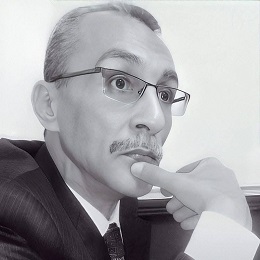
Muhammad Adel Zaky is an Egyptian researcher specializing in the history of economic thought. He is the author of Critique of Political Economy, a book that has gone through six editions. His research explores the evolution of economic ideas in relation to social and historical change.
|
|



| Contact Us | About Us | Donate | Terms & Conditions |


|
All Rights Reserved. Copyright 2002 - 2026